CRAFTSMAN CMXEVBE17040 Review: 4-Gallon Shop Vac Reviewed
In this article
- At a Glance
- What We Liked
- Suction That Reads Bigger Than the Drum
- Light Enough to Carry Where the Mess Is
- Attachments That Earn Their Spot
- It Holds Up Under Real Abuse
- Where It Falls Short
- It Is Loud, and That Decides Where You Use It
- The Hose Is Stiff Where You Want It Flexible
- Extension Tubes Slip Apart on Carpet
- Bags Cost Extra, and You Will Want Them
- Real-World Performance
- How It Compares to Alternatives
- Who Should Buy It
- FAQ
- Bottom Line
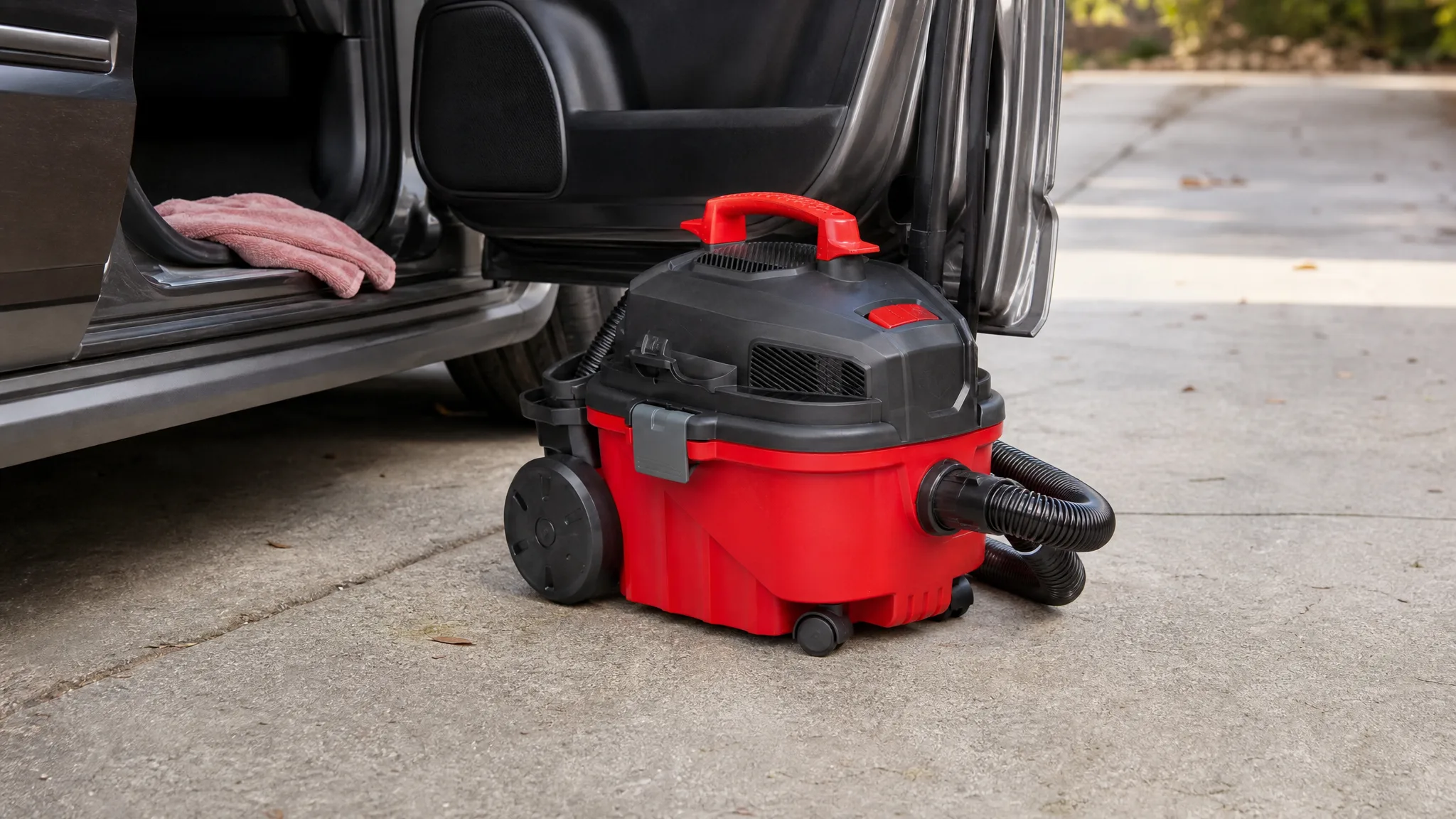
A car footwell packed with dried mud and dog hair, sawdust drifting off the end of a garage workbench, a knocked-over bin of cat litter in the hallway. Those are the messes a CRAFTSMAN CMXEVBE17040 is built for, a 4-gallon wet/dry shop vac organized around one idea: serious suction in a body you can pick up with one hand. Owner feedback and published specs put it in the mix for a car, a small workshop, and a few indoor spills.
Verdict: Suction that reads far bigger than the 4-gallon drum, in a vac light enough to carry out to the driveway one-handed. It is loud, and the hose fights you in tight spaces. 8.5/10.
Best for: Cars, small workshops, and quick home cleanups where strong suction and portability matter more than quiet operation
Skip if: You will run it indoors frequently, or you need a flexible hose for tight vehicle detailing

CRAFTSMAN
CRAFTSMAN CMXEVBE17040 4 Gallon 5.0 Peak HP Wet Dry Shop Vacuum
Best for
It’s best for cars, small workshops, and quick home cleanups where strong suction and portability matter more than quiet operation, but skip if you’ll use it indoors frequently or need a flexible hose for tight vehicle detailing.
After sifting through hundreds of reviews, we can say most owners agree this vacuum delivers strong suction in a compact, portable package that handles everyday cleanup well. The trade-off you’ll need to accept is that it’s quite loud and some plastic parts don’t feel as sturdy as the motor’s power suggests.
Loved by buyers
- •Strong suction that rivals larger shop vacs, making it a pick for car interiors, workshops, and garage floors.
- •Compact, lightweight build that’s easy to carry and store, with an onboard caddy for accessories.
- •Durability that holds up over time: one owner used the previous version for 30 years, and this model has gone strong for over 5 years in a bird room.
Buyer concerns
- •Noisy operation makes conversation difficult indoors.
- •The hose is stiff; swiveling ends help, but some owners swap it for a more flexible aftermarket hose.
- •Plastic extension tubes have been known to slip apart when stressed, especially on carpet.
At a Glance
| Spec | Detail |
|---|---|
| Type | Corded wet/dry shop vacuum |
| Model | CMXEVBE17040 |
| Tank capacity | 4 gallons |
| Motor | 5.0 peak HP (manufacturer claims) |
| Hose | 1-7/8 inch diameter, swiveling ends |
| Filtration | Cartridge filter included |
| Dust bags | Sold separately, worth buying for fine dust |
| Wet pickup | Yes |
| Attachments | Car nozzle, dusting brush, extension tubes |
| Storage | Onboard caddy for hose and accessories |
| Noise | Loud enough to make conversation difficult indoors |
What We Liked
Suction That Reads Bigger Than the Drum
Small shop vacs usually ask you to trade pull for size. This one does not. Point it at a gravel-strewn garage floor, a car mat crusted with winter grit, or the drift of fine dust under a miter saw, and it takes the lot on the first pass. The 1-7/8 inch hose is the reason. Wide bore means debris moves through instead of packing into a plug at the first bend, and owners doing woodworking report the same: fine dust keeps moving instead of stalling in the hose. Owners who run larger drum vacs alongside this one land in the same place: the 4-gallon body is not the limiting factor, your patience with the noise is.
Light Enough to Carry Where the Mess Is
The vac that gets used is the vac you can lift. At 4 gallons this one goes from the garage shelf to the driveway in one trip, up a flight of stairs without a rest, and into a trunk when a project happens somewhere else. The onboard caddy is a quiet win here too, since the hose and the nozzles ride with the machine rather than living in a separate bucket that goes missing. Storage is the other half of it. A big drum vac claims a corner of the garage permanently, and this one tucks onto a shelf between jobs.
Attachments That Earn Their Spot
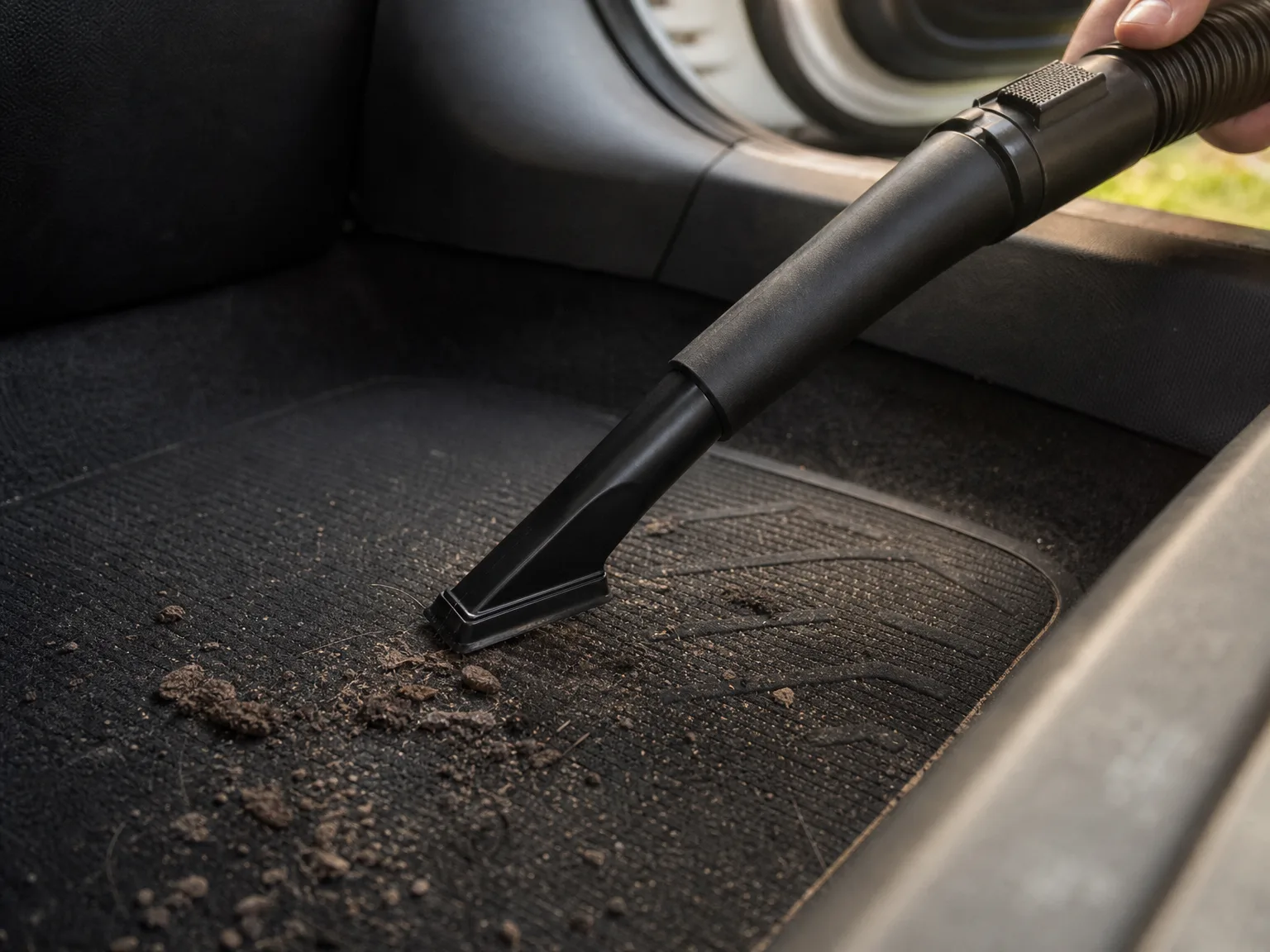
Two of the included tools do most of the work. The car nozzle is narrow enough to get down the seam between a seat and the console, which is where crumbs and pet hair collect and where a wide floor nozzle is useless. The dusting brush handles the surfaces you would otherwise wipe: dashboards, vents, window sills, the top of a workbench. Owner feedback on vehicle interiors and pet hair treats those two as the tools that earn their spot: debris is supposed to go up the hose instead of matting across the opening, which is a low bar that plenty of vacs still trip over.
It Holds Up Under Real Abuse
CRAFTSMAN shop vacs have a reputation for outliving the projects they were bought for, and this line looks like more of the same. Owners describe running the previous generation for decades, and this model logging years of daily service in dusty rooms without a drop in suction. One owner runs it at a car wash between eight and seventeen times a day and it has kept going. The motor is the part built to last here, which matters when you read the next section.
Where It Falls Short
It Is Loud, and That Decides Where You Use It
This is the trade you accept. Fire it up in a garage with the door open and it is normal shop vac noise. Fire it up in a hallway and conversation stops. Published specs and owner feedback both flag indoor use as the problem: conversation becomes difficult in the same room, and it is a poor fit during a nap or a phone call in the next room. If your cleanups happen mostly inside the house, that alone should push you toward a quieter machine. In a workshop or a driveway, where you were going to wear ear protection anyway, it barely registers as a complaint.
The Hose Is Stiff Where You Want It Flexible
The swiveling ends help, and they are the reason the hose does not twist itself into a knot every time you change direction. The hose body is another matter. It holds its coil memory and pushes back when you try to steer it into a narrow space, so detailing under a car seat becomes a two-handed job of fighting the hose rather than aiming the nozzle. Enough owners swap in a more flexible aftermarket hose that a replacement is worth budgeting for if vehicle interiors are your main use. For open floors it is a non-issue.
Extension Tubes Slip Apart on Carpet
The plastic extension tubes join by friction fit, and friction fit has limits. Push the wand into carpet pile and the drag can pull a joint apart mid-stroke, which leaves you holding half a wand while the rest sits on the floor. It comes up regularly from owners. A wrap of tape at the joint fixes it, and so does a lighter hand on carpet. Still, it is the part of the machine that feels cheaper than the motor deserves.
Bags Cost Extra, and You Will Want Them
Real-World Performance
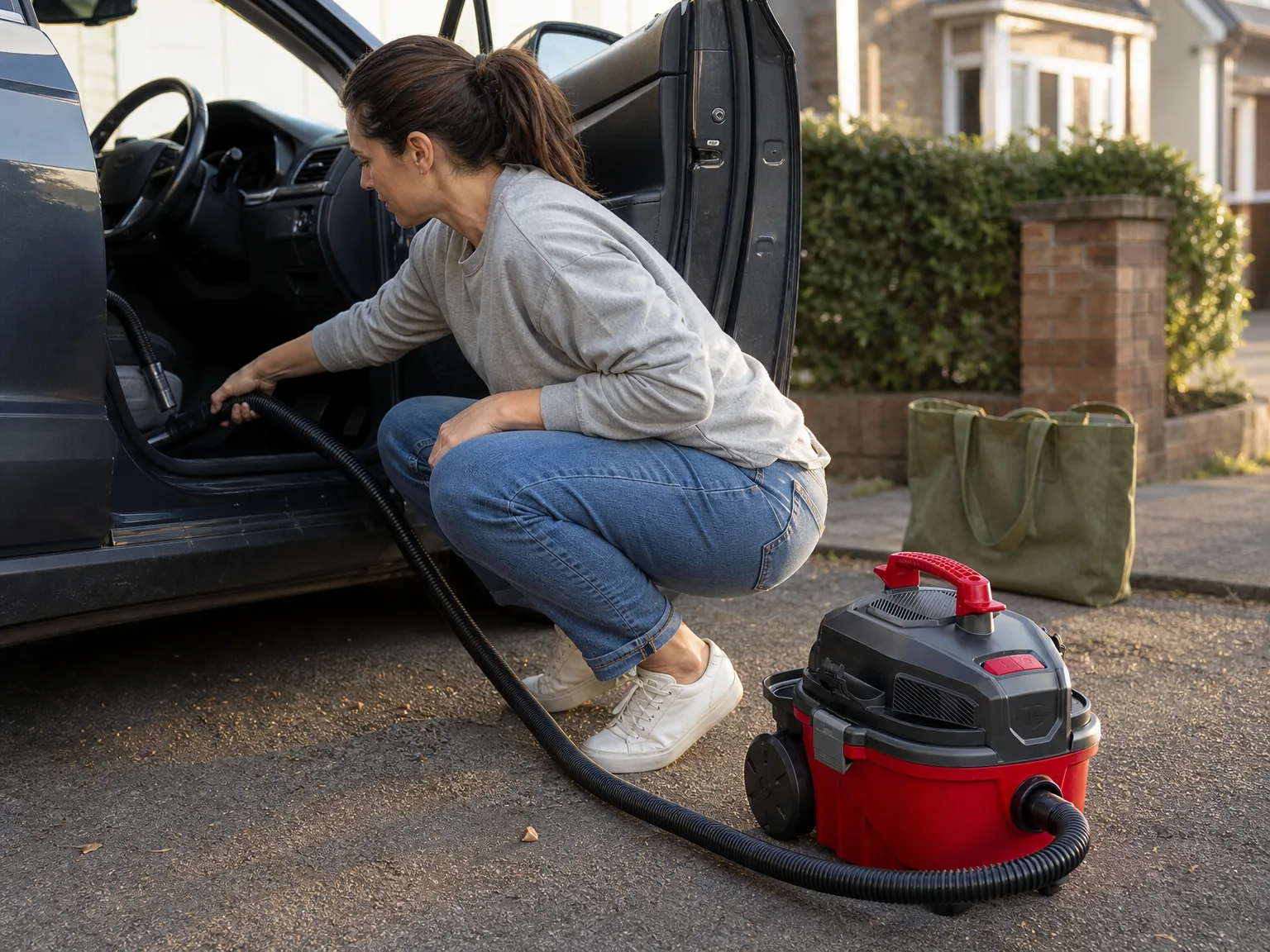
Car interior after a muddy dog walk is the job owner feedback and the included car nozzle point to as this vac's strength. The car nozzle is built to pull dried mud out of textured rubber mats, then work along seat seams where hair collects and a handheld tends to skate over it. Corded power is the difference. A cordless handheld starts strong and fades somewhere in the second row; published motor claims and owner reports describe pull that holds through a full interior plus the trunk. Hose stiffness is the friction point. Owners who detail under seats describe fighting the hose rather than aiming the nozzle.
Small workshop sawdust is where a bag matters. Fitting one first is the step that separates cleaning a shop from moving dust around it, which is why bags are sold separately and flagged as worth buying for fine dust. Fine dust is where cheap vacs clog, and the 1-7/8 inch hose is the published spec owners doing woodworking credit with keeping material moving without a stall. The 4-gallon drum fills faster than a 6-gallon on this kind of job, so plan on one trip to the trash for a serious cleanup session.
Indoor spill in a hallway: a knocked-over bin of cat litter across hard floor and the edge of a runner. Published suction and owner feedback treat heavy granular mess as a better fit for this machine than for a household vacuum. Two things stand out. The noise fills the room, and the extension tube can pop loose on a rug. Both are survivable for an occasional emergency. Neither is something to sign up for twice a week, and if indoor spills are routine in your home, a cordless stick vacuum is the better daily tool.
Standing water in the garage is the other published capability. Wet pickup is included, so a shallow pool on concrete is in-scope in a way household vacuums are not. That is the capability that justifies keeping a wet/dry vac around even if it only comes out a few times a year. Rinse the drum the same day. Anything left in there overnight will remind you about it later.
How It Compares to Alternatives
Against the Vacmaster 6-gallon wet/dry vac, the split is capacity and features versus portability. The Vacmaster holds half again as much and its drum-top unit detaches to work as a blower, which is handy for clearing a driveway or a garage bay of leaves. The CRAFTSMAN is the one you carry upstairs or drop in a trunk without thinking about it. If your vac is going to live in one spot in a workshop and you want a blower too, get the Vacmaster instead.
Against a dedicated car vacuum like the ZARIMI portable cordless car vacuum, the question is how big your messes are. The ZARIMI lives in the car, needs no outlet, and handles crumbs and light hair in a couple of minutes. It runs out of both battery and suction on caked mud or a full interior detail. The CRAFTSMAN needs a plug and a place to store it, and it does not quit halfway. Keep the cordless for weekly tidying and this for the deep clean.
Against a four-tool kit like the Voice-tank 4-in-1 car vacuum, this comparison is about honesty in attachment counts. Bundled kits pad the box with tools that never come out again. The CRAFTSMAN ships fewer pieces, and the car nozzle plus dusting brush cover the same ground the extras were supposed to. If you want one tool that also inflates a bike tire and blows dust off a keyboard, the multi-tool kits make more sense than a shop vac ever will.
Who Should Buy It
Look elsewhere if most of your cleaning happens inside the house. A shop vac has no powered brushroll, so carpet and rugs are outside what it does well, and the noise turns every indoor cleanup into an event the whole household hears. Fine detail work in a tight vehicle interior is also a stretch until you replace the hose with something more flexible.
What you get at this tier is a corded 5.0 peak HP motor, wet and dry capability, a car nozzle and dusting brush that both do useful work, and onboard storage that keeps the parts together. What you do not get is quiet operation, a flexible hose, or bags in the box. Budget for the bags, plan around the noise, and it is one of the more practical picks in the compact class.
FAQ
Does it come with bags?
No, bags are sold separately. The included cartridge filter handles most dry debris, but bags are worth it for fine dust and for emptying the drum without a cloud coming back at you. Order a pack with the vac rather than after your first drywall job.
Will it clog on fine dust like sawdust or drywall?
It handles fine dust without clogging, which owners doing woodworking report as well. The 1-7/8 inch hose diameter is doing most of that work, since a wider bore gives fine material somewhere to go instead of packing at a bend. Fit a bag first so the filter does not load up in minutes.
Can it handle daily commercial use?
Owner reports say it can. One owner runs it at a car wash between eight and seventeen times a day and it has held up through weeks of that schedule. The motor is the strong part of this machine. Expect the plastic extension tubes to need tape or replacing long before the motor gives up.
How long is the power cord?
Long enough for most jobs without being generous. Owners describe it as a good length rather than quoting a number. For a full driveway or a large garage, plan on an extension cord.
Is it quiet enough to use inside the house?
No. This is the honest weak point. It is loud enough that conversation stops in the same room, so treat it as a garage and workshop machine that occasionally comes inside for an emergency spill. If quiet operation is a priority in your home, this is the wrong vac.
Can it replace my regular vacuum?
No. There is no powered brushroll, so it will not lift ground-in dirt out of carpet pile the way a household vacuum does, and the hose is clumsy for routine floor work. Keep a floor vacuum for the house and use this for the car, the garage, the workshop, and anything wet.
Bottom Line
The CMXEVBE17040 is the compact shop vac to reach for when a mess is too heavy or too wet for a regular vacuum. Suction and portability are both genuinely good, and owner reports treat the motor as the part that will outlive several sets of the plastic tubes around it. The noise is the real cost, so buy it for the garage, the driveway, and the car rather than the living room. Add a pack of bags to the order, and if vehicle interiors are your main job, put a flexible aftermarket hose on the list too.
In this article
- At a Glance
- What We Liked
- Suction That Reads Bigger Than the Drum
- Light Enough to Carry Where the Mess Is
- Attachments That Earn Their Spot
- It Holds Up Under Real Abuse
- Where It Falls Short
- It Is Loud, and That Decides Where You Use It
- The Hose Is Stiff Where You Want It Flexible
- Extension Tubes Slip Apart on Carpet
- Bags Cost Extra, and You Will Want Them
- Real-World Performance
- How It Compares to Alternatives
- Who Should Buy It
- FAQ
- Bottom Line