Eureka NEU182B PowerSpeed Review: Dog Hair Compared for 6 Weeks
In this article
- At a glance
- What we liked
- The brushroll digs hair out instead of winding it up
- Twenty-four feet of cord changes the route you clean
- Five height clicks handle carpet that stalls cheaper machines
- The bin and the filter both stay cheap to live with
- Where it falls short
- The rear wheels work loose, and then they come off
- Side exhaust blows dust back into the room
- Light rugs get swallowed by the floor head
- It can keep humming after it stops cleaning
- Real-world performance
- How it compares to alternatives
- Who should buy it
- Frequently asked questions
- Does it pick up pet hair well?
- How long is the power cord?
- Is it lightweight?
- Can it adjust for different floor types?
- How big is the dust cup?
- Do the wheels really fall off?
- Is it safe for allergy sufferers?
- Bottom line
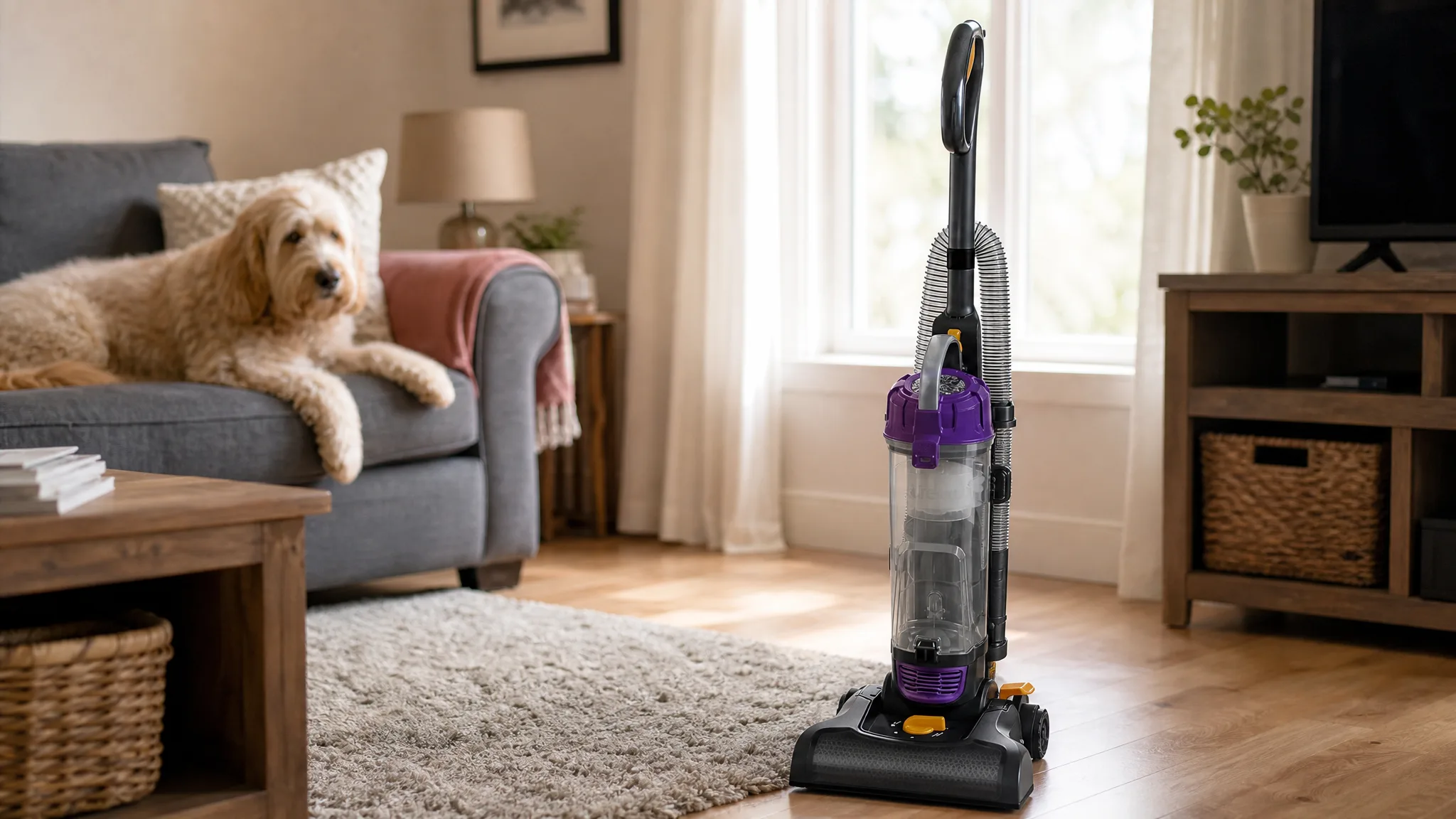
By Thursday the hallway runner looks like it grew a coat of its own. That is normal life with a heavy shedding dog, and it is exactly the job we handed the Eureka NEU182B PowerSpeed, a corded bagless upright that costs less than a decent cordless handheld. Six weeks, one shedding dog, oak and tile downstairs, thick carpet upstairs, all run through our standard testing process.

Eureka
Eureka NEU182B PowerSpeed Bagless Upright Vacuum Cleaner, Purple
Rear wheels loosening and exhaust blowback are the two reasons it annoys owners after the first year.
Loved by buyers
- •Motorized brush roll rips embedded dog hair from carpet without wrapping strands around itself
- •Extra-long cord covers multiple rooms from a single hallway outlet on most floor plans
- •Oversized bagless bin and a washable foam filter cut down trips to the trash and sink
Buyer concerns
- •Rear wheels come loose and fall off repeatedly once past the one-year mark
- •Side exhaust kicks dust and pet dander into the air, a problem for allergy-prone households
- •Lightweight bath mats and throw rugs get pulled into the head unless you lower the setting
At a glance
| Specification | Detail |
|---|---|
| Type | Corded bagless upright |
| Weight | Around 10 pounds |
| Cord | About 24 feet (7.4 meters) |
| Dust cup | 2.6 liters |
| Filter | Washable foam |
| Height settings | Five, set by a dial on the floor head |
| Brushroll | Motorized, for carpet and bare floors |
| Exhaust | Vented out the side of the body |
| Best floors | Carpet up to shag, plus bare floors |
| Struggles with | Lightweight bath mats and thin throw rugs |
| Known weak point | Rear wheels, usually after the first year |
What we liked
The brushroll digs hair out instead of winding it up
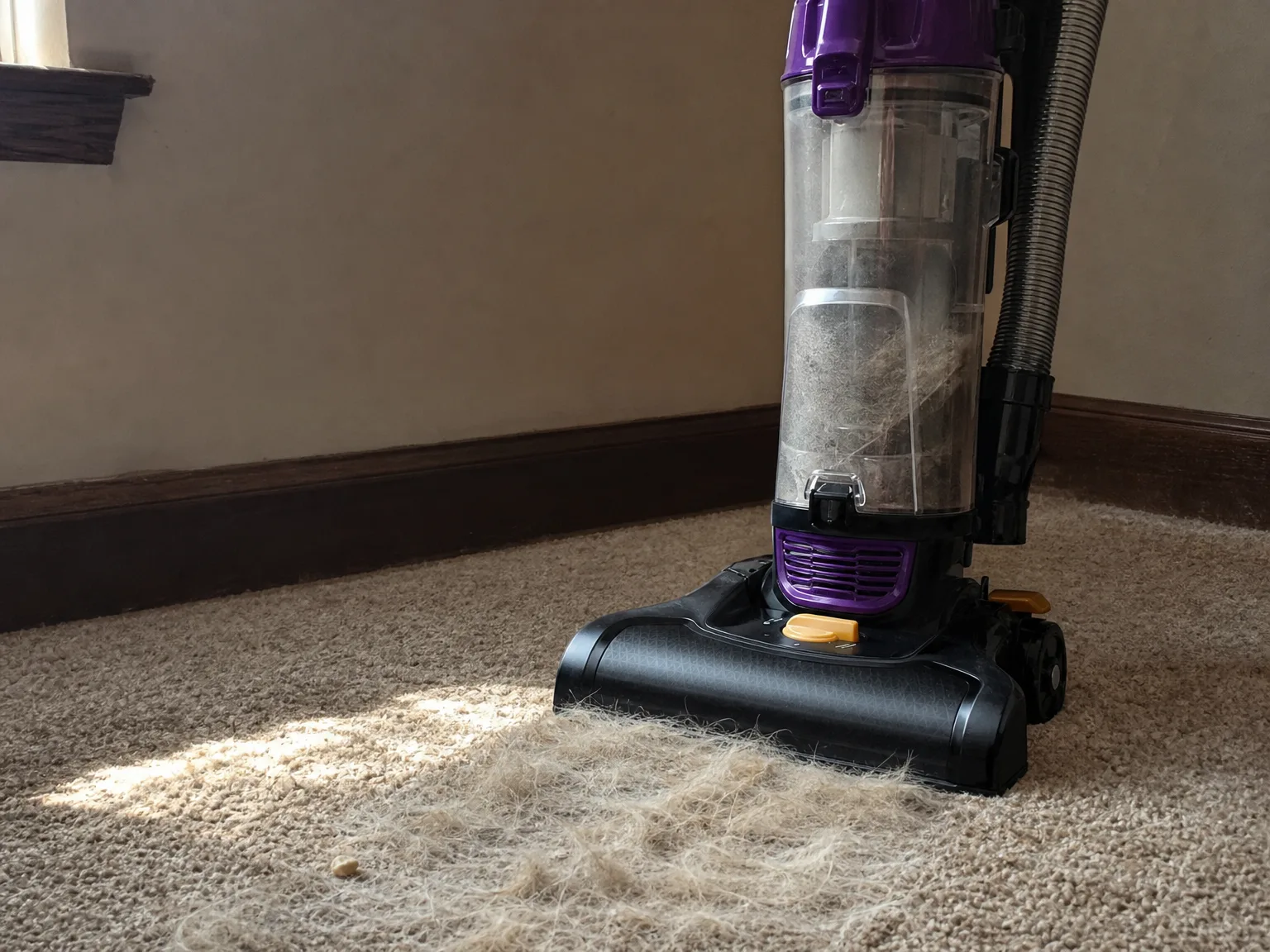
This is the part that earns the money. The motorized brush roll grabs fur that has worked down into the weave and lifts it, rather than skating over the top and taking only what was loose. On the traffic strip in front of the sofa, two passes cleared what a suction-only stick vacuum leaves behind after five.
What surprised us more is what did not happen. Dog hair mostly went into the bin instead of spinning itself into a felted collar around the roller. We still cut hair off it every few weeks, but the ten minutes with scissors that most pet households budget for turned into two. Long human hair is a different story and still wraps, so check the roller if the pitch of the motor changes.
Twenty-four feet of cord changes the route you clean
Most cheap uprights hand you a stubby cord and let you sort it out. This one is rated at about 24 feet, which in owner reports covered the living room, the hallway, and both bedrooms off it from a single outlet by the stairs. We unplugged once during a full upstairs session instead of four times.
That sounds like a convenience detail. It is really a frequency detail. The number of small interruptions in a cleaning session is what decides whether you do the whole floor or quit after the room that was bothering you. Fewer trips back to the wall means more rooms get done, and this is the single biggest practical advantage the NEU182B has over the budget upright vacuums it sits next to on the shelf.
Five height clicks handle carpet that stalls cheaper machines
The dial on the floor head has five positions, and unlike a lot of token height adjusters, the range is wide enough to matter. Owners report clearing carpet as deep as 5/8 inch on the highest setting. Our thickest test surface was a shag area rug that makes budget uprights bog down and stall, and the head rode it without the motor lugging.
Bare floors go the other way. Drop to the lowest click and the head seals against oak and tile, which is where crumbs and tracked-in grit come up cleanly. One dial, no swapping heads, no separate hard floor attachment to lose in a closet. For a home with three or four different surfaces, that is the whole point.
The bin and the filter both stay cheap to live with
The dust cup holds 2.6 liters. Some owners empty it only every third session, and after a whole-house run in a shedding household ours still had room. The bagless emptying routine is the usual one: hold it over the can, hit the latch, expect a small puff of fine dust. Hair tends to come out as one mat rather than clinging to the walls of the cup.
The foam filter washes. Rinse it, let it dry all the way, put it back. There is no cartridge to reorder and no bag to run out of at the wrong moment, so the running cost of this vacuum is basically zero. Do not skip the drying part. A damp foam filter smells within a day and chokes suction while it is in there.
Where it falls short
The rear wheels work loose, and then they come off
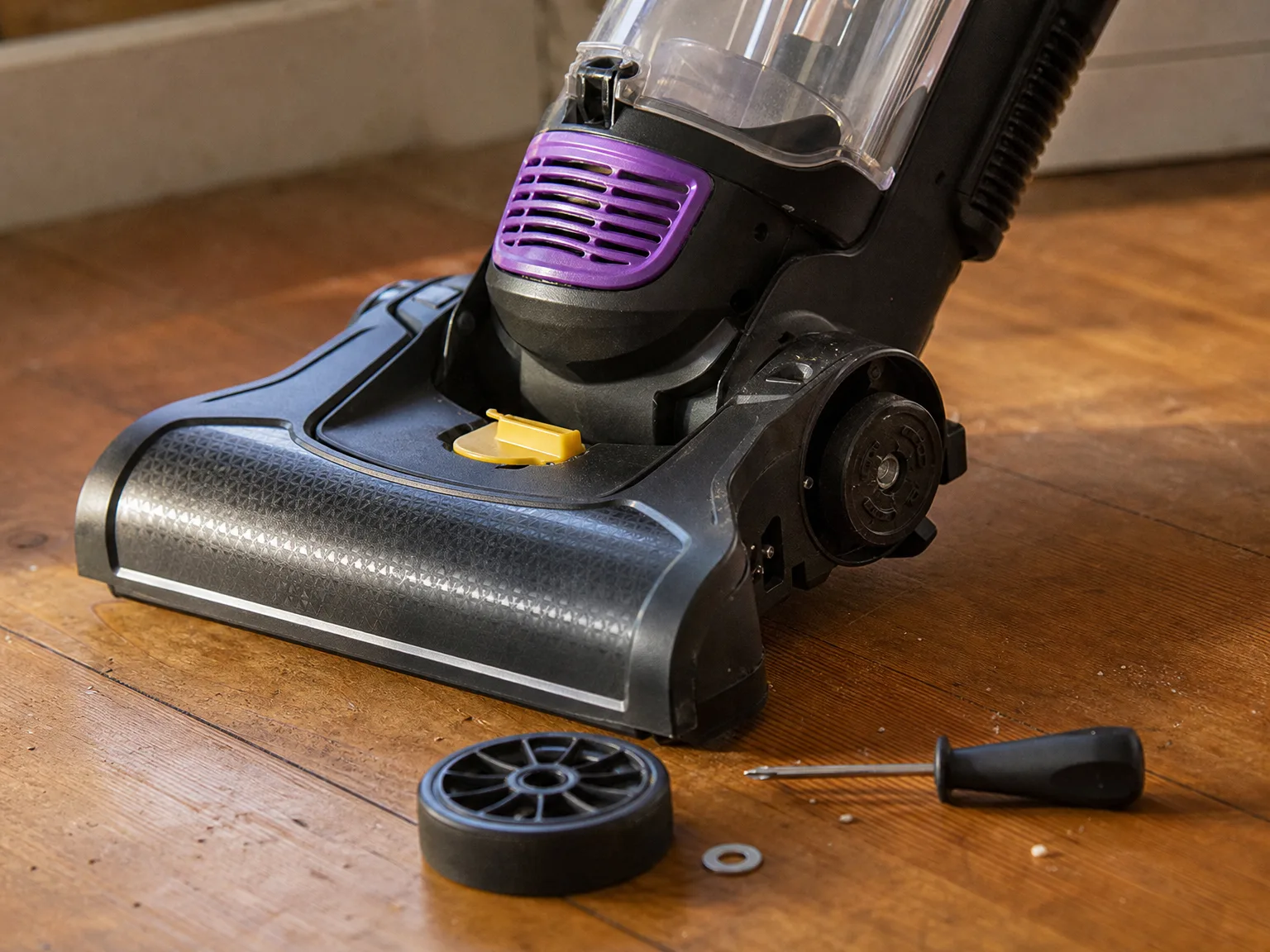
This is the complaint owners raise more than any other, and it clusters after the first year rather than out of the box. The rear wheels loosen, wobble, and eventually drop off the axle. People fix them, and they come off again. It is the reason a machine that cleans well still frustrates the people who own it longest.
Side exhaust blows dust back into the room
The exhaust vents out the side of the body at ankle height, and it is strong enough to stir what is already on the floor. Vacuum past a dusty baseboard and you can watch it lift. In an allergy household this is a real problem, because the fine dander a vacuum is supposed to trap partly gets pushed back into the air you are standing in.
Light rugs get swallowed by the floor head
Bath mats, thin runners, and anything without rubber backing get pulled up into the head. Suction plus an aggressive brushroll is a combination light textiles lose. You end up stopping to peel the mat back out, and the machine grumbles while you do it.
The fix is to raise the height setting a click or two before you cross one, which works and is one more thing to remember mid-clean. In a bathroom or an entryway with several small mats, most people just pick them up first. Worth knowing before you buy if your floors are covered in the kind of thin, cheap rugs that pets like sleeping on.
It can keep humming after it stops cleaning
A smaller group of owners describe the machine losing bottom suction or the brush roll quitting while the motor still runs at full volume. Nothing sounds wrong, and the floor just stops getting clean. That is a nasty failure mode because you can push it around for a week before you notice.
Get in the habit of a quick check. Tip the head up, watch the roller spin, and put your hand near the intake. If the roller is dead but the motor is loud, look for a clog or a slipped belt before you assume the vacuum is finished. This is not the machine to buy if you want zero mechanical attention over the years.
Real-world performance
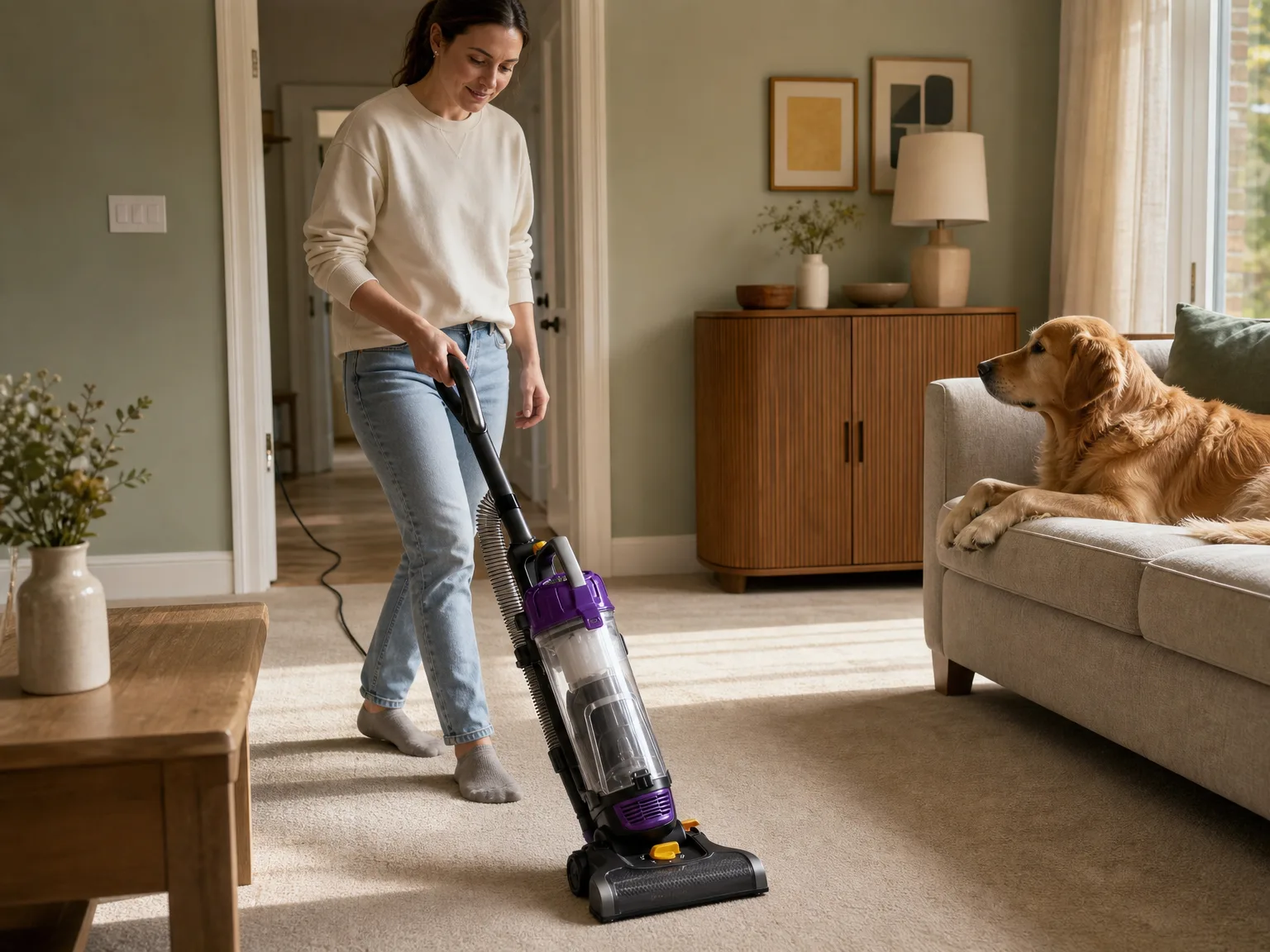
Daily dog hair on medium-pile carpet. The job the machine exists for, and it does it. Two passes across the strip in front of the sofa took up loose fur and the hair that had worked into the top of the weave. Deep dander at the very base of the pile is beyond it, as it is beyond anything in this class. Visible pet hair is gone in one short session.
The shag rug. The surface that separates real height adjustment from a marketing bullet. On the highest setting the head sat on top of the fibers, kept moving, and pulled hair out of the pile without the motor straining. Push a fixed-height budget upright onto shag and it either grips and stops or floats and cleans nothing.
Oak and tile. Lowest setting, clean pickup, crumbs and grit go into the cup rather than sideways at the baseboard. Watch the exhaust here more than anywhere else. On a hard floor that has gone a few days, the side vent visibly pushes dust ahead of the machine, so work toward the exit rather than away from it.
A full upstairs run on one outlet. Three rooms and a hallway, roughly 20 minutes, one plug change. The cord is genuinely the difference. Compared with a short-cord upright, the session stayed continuous instead of turning into four short ones with walking in between.
Noise. Ordinary for a corded upright with a motorized roller. Loud enough to pause a phone call, not loud enough to clear the room, and it drops a little on bare floors. It is not a machine for cleaning while a baby naps upstairs.
Maintenance. Empty the cup at around two thirds rather than waiting for it to pack. Rinse the foam filter monthly and dry it fully. Check the roller and the rear wheels every few weeks. That last item is the one owners wish they had started earlier, because a wheel caught while it is merely loose is a much easier fix than one found in the middle of the floor.
How it compares to alternatives
If stairs and hair wrap are your two problems and you want to spend less than the LA702, the Shark ZU561 Navigator Lift-Away keeps the detachable pod but hands back some cord length. For allergy households, the honest answer is that no version of this machine is right, and something like the Soniclean WhisperJet C2 with ULPA filtration is the category you should be shopping in. If your floors are mostly hard and you want grab-and-go instead of plug-in, our mohomo cordless stick review covers what you trade away.
If anyone in the house has allergies, get the Soniclean instead. The exhaust on this Eureka undoes the work.
Who should buy it
Buy the NEU182B if a dog sheds on your floors every day, your home mixes carpet and hard surfaces, and you want the cheapest machine that genuinely pulls hair out of a pile rather than skimming it. The long cord suits homes where outlets are scarce, the five height settings suit homes where the flooring changes room to room, and 10 pounds is light enough that the upstairs actually gets cleaned.
Look elsewhere if allergies are a factor, if you want a vacuum you will never open a toolbox for, or if stairs and upholstery are a big part of your weekly routine. The side exhaust, the rear wheels, and the fixed body are structural, not technique problems, and no amount of careful use makes them go away.
Frequently asked questions
Does it pick up pet hair well?
Yes, and this is its strongest quality. The motorized brush roll lifts embedded hair out of carpet rather than gliding over it, and owners with heavy shedding dogs and cats consistently report strong pickup on both carpet and hard floors. Hair driven right down to the backing is still beyond it, as it is beyond every vacuum at this money.
How long is the power cord?
About 24 feet, or 7.4 meters. In practice that reaches a whole floor of a small home or several connected rooms in a larger one from a single hallway outlet, which is well above average for a budget upright and the main reason sessions stay uninterrupted.
Is it lightweight?
It sits around 10 pounds, which is light for a full-size upright. Most owners carry it between floors one-handed without complaint. That weight is why quick five minute sessions happen at all, since nobody wants to haul an 18 pound machine up the stairs for one room.
Can it adjust for different floor types?
Five height settings cover thick carpet, shag rugs, and hard floors, and one owner reports using the highest setting on 5/8 inch carpet. Turn the dial down for oak and tile so the head seals, and up for pile so the brushroll does not bog. There are no heads to swap.
How big is the dust cup?
2.6 liters, which is large for this class. Some owners empty it only every third use. In a shedding household we would empty it more often than that, because pickup starts to soften once the cup packs above about two thirds.
Do the wheels really fall off?
It is the most common long-term complaint, and it typically shows up after the first year rather than immediately. The rear wheels loosen on the axle and eventually detach. Check them every few weeks and tighten early. Some owners fix it permanently with a washer, others live with reattaching them.
Is it safe for allergy sufferers?
No. The exhaust vents out the side of the body and pushes fine dust and dander back into the room, and there is no sealed HEPA system to catch it first. If anyone in the house reacts to dust, buy a vacuum with sealed filtration instead.
Bottom line
In this article
- At a glance
- What we liked
- The brushroll digs hair out instead of winding it up
- Twenty-four feet of cord changes the route you clean
- Five height clicks handle carpet that stalls cheaper machines
- The bin and the filter both stay cheap to live with
- Where it falls short
- The rear wheels work loose, and then they come off
- Side exhaust blows dust back into the room
- Light rugs get swallowed by the floor head
- It can keep humming after it stops cleaning
- Real-world performance
- How it compares to alternatives
- Who should buy it
- Frequently asked questions
- Does it pick up pet hair well?
- How long is the power cord?
- Is it lightweight?
- Can it adjust for different floor types?
- How big is the dust cup?
- Do the wheels really fall off?
- Is it safe for allergy sufferers?
- Bottom line