EyeVac Home Touchless Review: Dustpan Compared for Hard Floors
In this article
- At a glance
- What we liked
- No more bending down for a dustpan
- Catches fine debris that dustpans miss
- Pull-out canister handles frequent emptying
- Where it falls short
- The motor is loud
- It only works if you sweep the pile to the inlet
- Sensor alignment takes getting used to
- Real-world performance
- How it compares to alternatives
- Who should buy it
- Frequently asked questions
- Does the EyeVac Home pick up pet hair without scattering it?
- How loud is the EyeVac Home?
- Does the sensor work every time?
- Can it handle fine debris like glitter or dust?
- Does the EyeVac Home replace a regular vacuum?
- How do you clean the canister and sensor?
- Bottom line
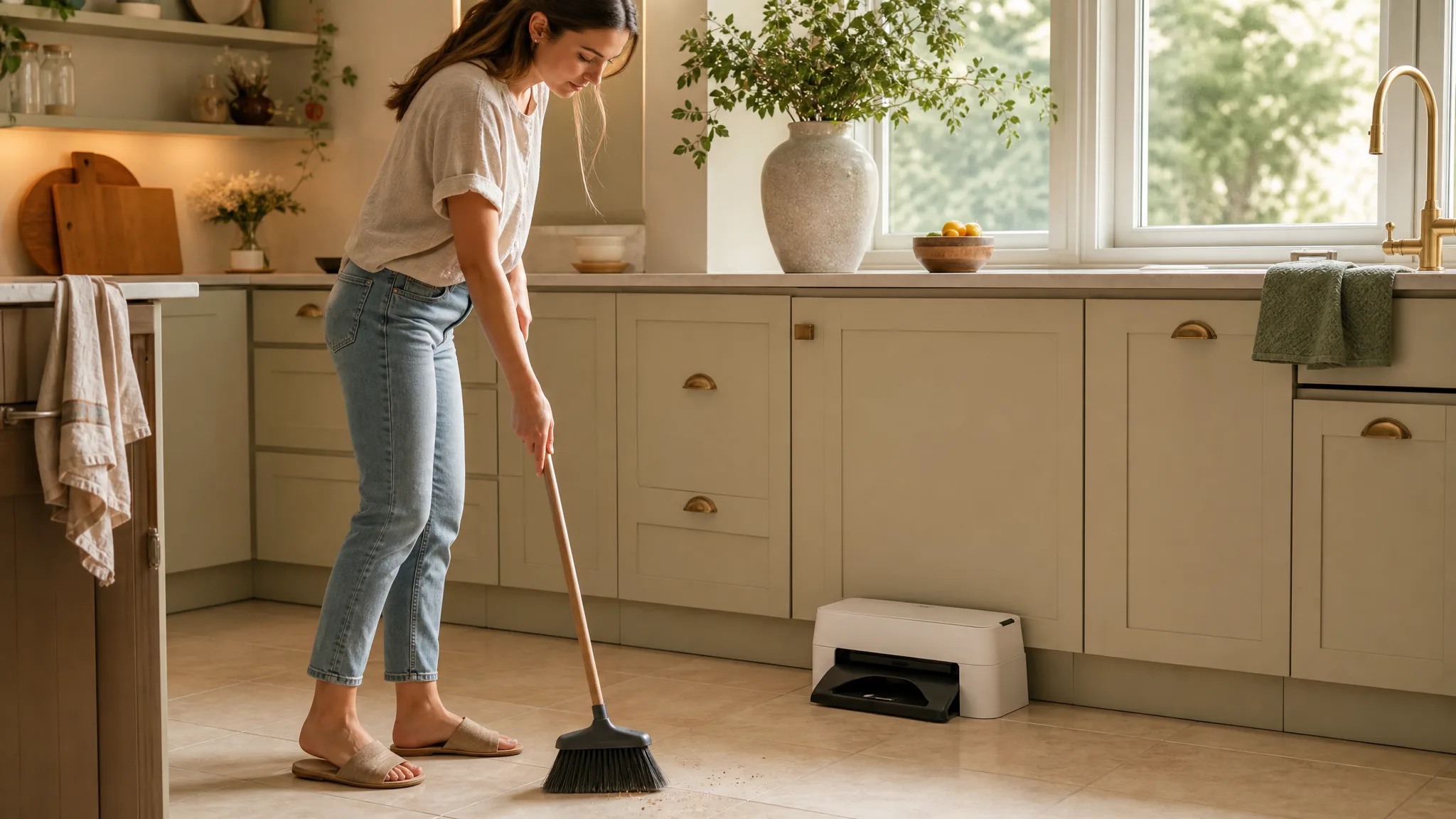
After sweeping pet hair into a dustpan for the thousandth time, only to watch half of it scatter across the kitchen floor before the pan touches the tile, a touchless vacuum dustpan starts to sound less like a gadget and more like a sanity fix. The EYE-VAC EyeVac Home promises exactly that: sweep debris toward it, the infrared sensor fires the motor, and the pile vanishes into a bagless canister. You stop bending, stop scraping, and stop leaving a trail of crumbs behind the dustpan lip. Owner feedback and published specs confirm that this 1000W automatic dustpan delivers on that promise.
Verdict: The EyeVac Home replaces the dustpan line for daily hard-floor sweepups, especially in kitchens, craft rooms, and pet feeding areas. The infrared sensor fires reliably when debris is swept close, and the bagless canister handles frequent emptying without hassle. It is not a replacement for a full vacuum, and the loud motor burst can startle skittish pets and noise-sensitive households. 7.5/10.
Best for: Homeowners with hard floors who sweep daily and want to skip the dustpan. Pet owners dealing with piles of dog or cat hair. Crafters and parents who clean up glitter, crumbs, and fine debris multiple times a day.
Skip if: You need a quiet cleanup solution for skittish pets or sleeping kids. You expect it to replace a full vacuum for whole-room or carpet cleaning. Your home has mostly medium-pile or high-pile carpet.

EYE-VAC
EyeVac Home Touchless Vacuum Automatic Dustpan - Great for Sweeping Pet Hair Food Dirt Kitchen - Ultra Fast & Powerful, No More Bending Down, Bagless, Corded, Automatic Sensors, 1000 Watt (White)
Best for
Best for hard-floor kitchens, craft rooms, and pet areas where sweeping happens daily, while homes that need quiet cleanup or full-room vacuuming should skip it.
Owners mostly agree the EyeVac Home makes sweeping less annoying by pulling hair, crumbs, litter, sand, and craft debris into the canister without bending for a dustpan. The trade-off is that it only works after you sweep debris directly to the inlet, and the short suction burst sounds too loud for some pets and noise-sensitive homes.
Loved by buyers
- •Replaces the dustpan line for daily hard-floor piles of pet hair, crumbs, and glitter
- •Automatic sensor helps people with sore backs avoid repeated bending
- •Pull-out canister handles frequent kitchen or salon-style sweepups
Buyer concerns
- •Motor noise can scare skittish pets when auto mode kicks on
- •Sensor may miss the pile unless the broom and debris line up at the opening
- •It still needs a broom and does not replace a regular vacuum
At a glance
| Spec | Detail |
|---|---|
| Product Type | Automatic touchless dustpan vacuum |
| Power | 1000W (corded) |
| Activation | Infrared sensor (auto mode) or foot-pedal manual |
| Dirt Disposal | Bagless, front pull-out canister |
| Noise Level | Loud burst (a few seconds per activation) |
| Best Surface | Hard floors, low-pile rugs |
| Corded / Cordless | Corded |
What we liked
The EyeVac Home earned a spot in daily routines for three specific reasons tied to how real homes actually collect dirt.
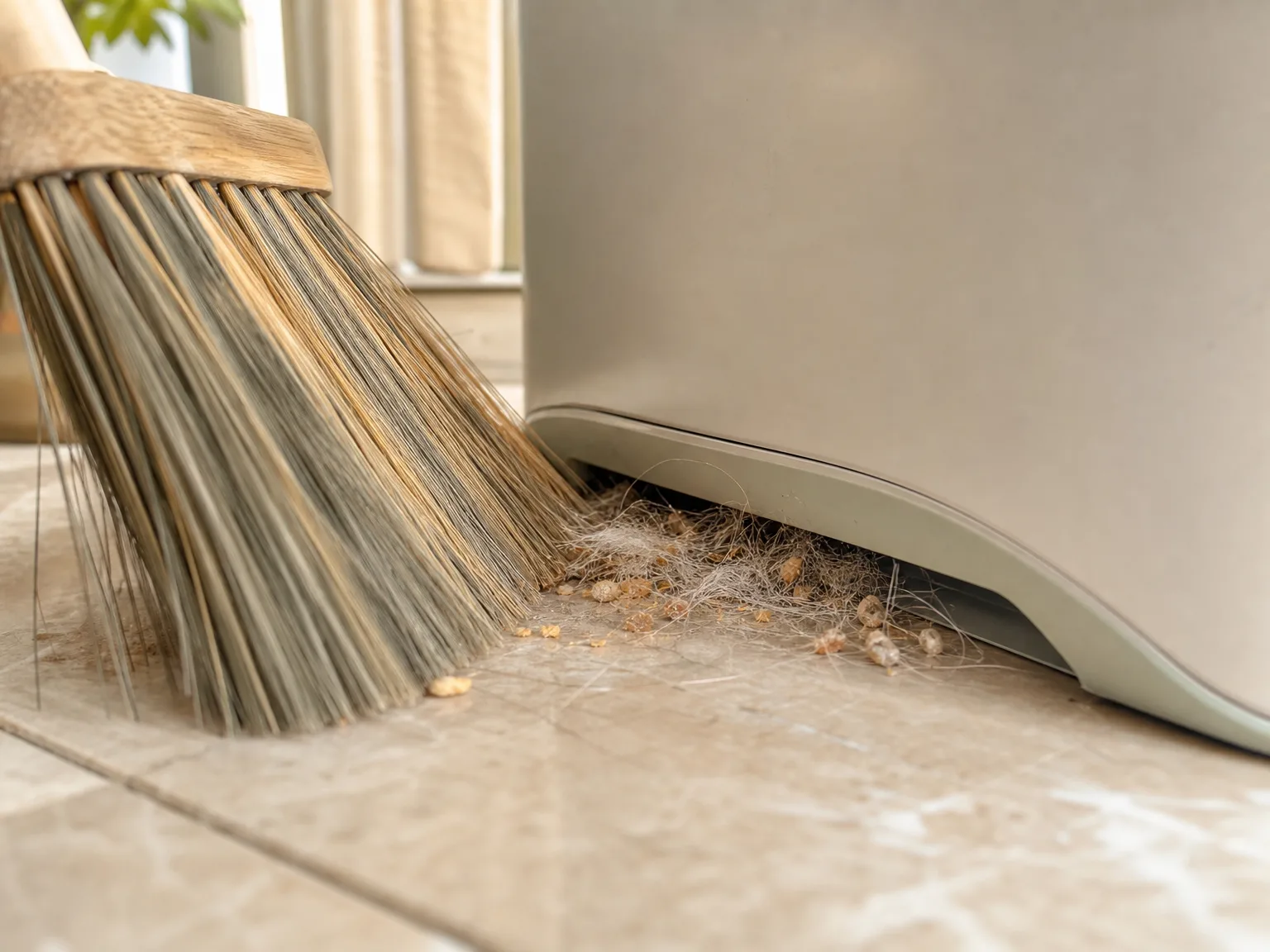
No more bending down for a dustpan
Catches fine debris that dustpans miss
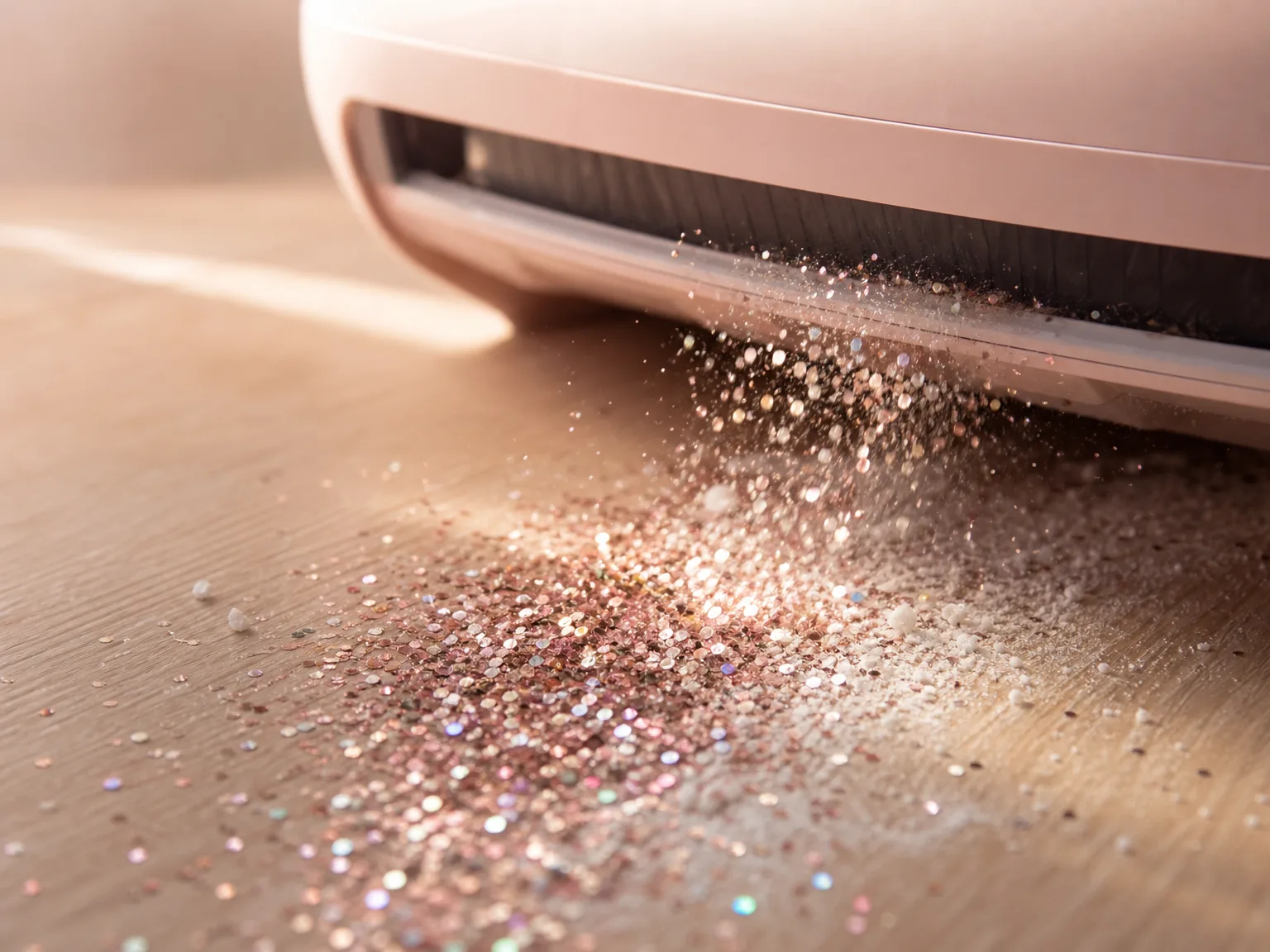
Fine particles like craft glitter, baking flour, ground coffee, and crushed pet kibble make a standard dustpan nearly useless. The pile leaves a trail, puffs back out, or settles into the gap between the pan lip and the floor. The 1000W suction of the EyeVac eliminates that problem entirely. Crafters and parents confirm it pulls everything within the sweep path. This makes cleanup faster and more thorough than a traditional dustpan.
Pull-out canister handles frequent emptying
The bagless canister slides out from the front of the unit, which means you can empty it without moving the whole device from its spot against the wall. For a kitchen or pet feeding area that sees multiple sweep-ups per day, this convenience adds up. You pull the canister, dump it in the trash, and slide it back in. No bag replacements, no wrestling a full dustpan to the bin while trying not to spill.
Where it falls short
The motor is loud
The suction burst is comparable to a full-size vacuum running at close range. It lasts only a few seconds per activation, but in a quiet home, that short blast is jarring. Owners of skittish cats and dogs report that the auto-sensor trigger can send a pet running, especially if the animal walks in front of the unit and sets it off unprompted. This is the trade-off for 1000W of instant suction in a small footprint, and it is worth knowing before you install it in a nursery, home office, or near a noise-sensitive pet feeding station.
It only works if you sweep the pile to the inlet
The EyeVac Home does not move. It sits in one spot against the wall, and every piece of debris must be swept to its opening. This is obvious in theory but easy to forget in practice: you are still sweeping. The product replaces the dustpan, not the broom. For anyone hoping it would patrol a room like a robot vacuum or cover a large floor area in one pass, this will disappoint. It is a focused tool for the spot where piles naturally accumulate, not a cleaning shortcut that eliminates sweeping.
Sensor alignment takes getting used to
The infrared sensor fires reliably about 98 percent of the time, but the activation window is narrower than you might expect. If the broom and debris are not lined up squarely with the inlet, the sensor may not trigger on the first pass. A small shift in broom angle usually fixes it, but the learning curve is real. Some users report needing a few days to get accustomed to the sensor's activation zone.
Real-world performance
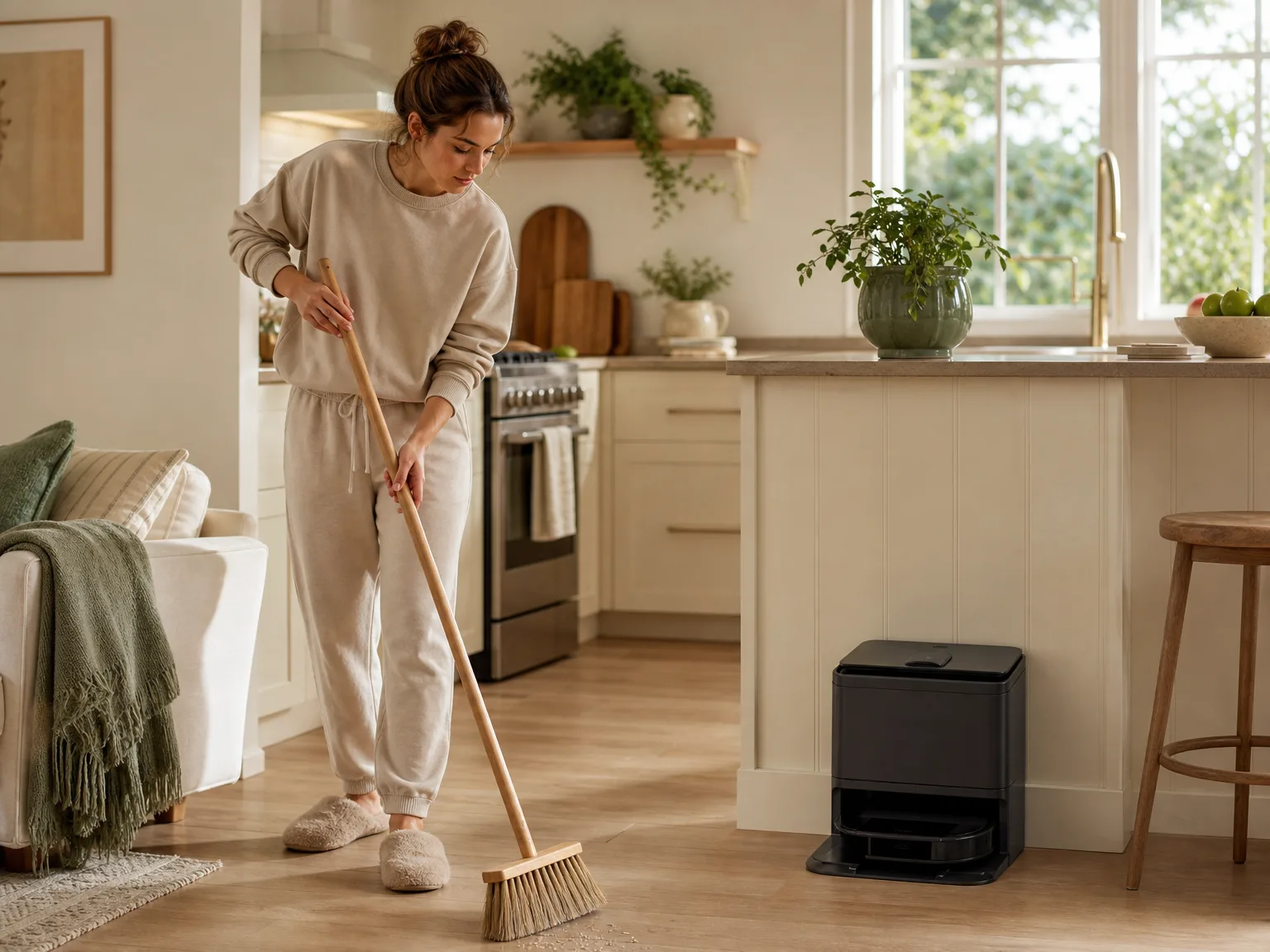
Owner feedback from kitchens with pets, craft workspaces, and entryways highlights consistent performance. In kitchens with pets, the EyeVac Home effectively collects kibble fragments, cat litter, and pet hair without the usual dustpan chase. While the loud motor burst initially startles some pets, most adjust quickly. In craft areas, it pulls fine glitter, paper snips, and beads on the first pass, outperforming traditional dustpans. Entryway debris like sand and gravel are also handled efficiently, with the pull-out canister making frequent emptying convenient.
How it compares to alternatives
The EyeVac Home sits in a category largely on its own as a stationary automatic dustpan, so direct comparisons are limited. The EyeVac Pro uses the same concept with a larger motor and a metal canister, designed for higher-traffic commercial settings like hair salons and barbershops. The difference is mostly durability and duty cycle. For a home kitchen or craft room, the Home version matches the need without the commercial upcharge.
The Aspiron 1700W Canister Vacuum offers whole-room cleaning for hard floors and pet hair, but it requires pulling out a canister and unwinding a hose for every use. It cleans more thoroughly across an entire room, yet it takes longer per session than sweeping toward the EyeVac. If you want full-room deep cleaning, get the Aspiron. If you want daily spot cleanup without dragging out a full vacuum, the EyeVac Home is faster.
For portable quick-cleanup, the Antaha Handheld Vacuum is cordless and reaches car seats and countertops, but its 11,000Pa suction is weaker than the EyeVac 1000W motor, and the tiny bin fills fast. The Antaha works for spot cleaning where an outlet is not nearby. The EyeVac does a better job on large piles in one spot because the larger canister and higher suction handle volume.
If you need a broom-free solution for a single room, get the EyeVac Home. If you need whole-room deep cleaning or carpet coverage, pick a canister or stick vacuum instead.
Who should buy it
Skip it if your home is mostly carpeted, if you need a quiet cleaning tool for noise-sensitive spaces, or if you expect a single device to handle both daily spot cleanup and weekly whole-room vacuuming. The EyeVac Home replaces the dustpan, not the vacuum.
The practical value of the EyeVac Home depends entirely on your routine. If you sweep a hard-floor area daily, it saves time and spares your back. If you vacuum once a week and rarely touch a broom, its use case shrinks.
Frequently asked questions
Does the EyeVac Home pick up pet hair without scattering it?
Yes. The suction pulls pet hair directly into the canister when you sweep it toward the inlet. Owners of heavy-shedding dogs and cats report that hair disappears instantly without the scattering that happens with a standard dustpan. The motor engages only when the sensor detects debris nearby, so the airflow stays concentrated at the opening.
How loud is the EyeVac Home?
The motor runs at a volume comparable to a standard vacuum cleaner, but the noise lasts only a few seconds per activation. Multiple owners note that the sudden burst can startle skittish pets or people who walk in front of the sensor unprompted. Some users switch to foot-pedal manual mode to avoid unexpected activations.
Does the sensor work every time?
The infrared sensor triggers reliably when debris is swept directly in front of the inlet. In practice, it activates around 98 percent of the time on the first sweep. Occasionally, repositioning the broom by an inch is needed to line up the debris with the sensor field. The learning curve takes a few days, after which the activation becomes routine.
Can it handle fine debris like glitter or dust?
Yes. The 1000W suction is strong enough to pull fine particles including glitter, baking soda, coffee grounds, and crushed kibble without leaving a trail. This is one area where the EyeVac Home clearly outperforms a standard dustpan, which typically lets fine material slip under the lip. Crafters and parents confirm it handles tiny messes that a dustpan would leave behind.
Does the EyeVac Home replace a regular vacuum?
No. The EyeVac Home is designed to replace the dustpan, not the vacuum. It sits in one spot and pulls in debris that you sweep to its opening. It does not move across floors, clean carpet, or cover large areas in a single pass. For whole-room cleaning, a canister or stick vacuum is still necessary. The EyeVac Home handles the daily spot cleanup that falls between sweeping and full vacuuming sessions.
How do you clean the canister and sensor?
The bagless canister slides out from the front for emptying and rinsing. Over time, fine dust can accumulate on the infrared sensor window, which may reduce activation sensitivity. A quick wipe with a dry cloth restores full function. The manufacturer recommends cleaning the sensor every few weeks depending on usage and debris type.
Bottom line
In this article
- At a glance
- What we liked
- No more bending down for a dustpan
- Catches fine debris that dustpans miss
- Pull-out canister handles frequent emptying
- Where it falls short
- The motor is loud
- It only works if you sweep the pile to the inlet
- Sensor alignment takes getting used to
- Real-world performance
- How it compares to alternatives
- Who should buy it
- Frequently asked questions
- Does the EyeVac Home pick up pet hair without scattering it?
- How loud is the EyeVac Home?
- Does the sensor work every time?
- Can it handle fine debris like glitter or dust?
- Does the EyeVac Home replace a regular vacuum?
- How do you clean the canister and sensor?
- Bottom line