iRobot Roomba 675 Review: Pet Hair Compared for 6 Weeks
In this article
- At a glance
- What we liked
- It finds dirt you thought you had already cleaned
- You set the schedule once and stop thinking about it
- The cliff sensors do not gamble with stairs
- Where it falls short
- It bounces around instead of planning a route
- It gets stuck, and you will be the rescue crew
- Long hair wraps the brushes every single week
- It is loud on hard floors
- Real-world performance
- How it compares to alternatives
- Who should buy it
- Frequently asked questions
- Does it work on dark area rugs?
- How often do I need to empty the dust bin?
- How well does it handle pet hair without clogging?
- Can I use it on multiple floors without moving the dock?
- How long does the battery last on one charge?
- Is it worth buying over a mapping robot?
- Bottom line
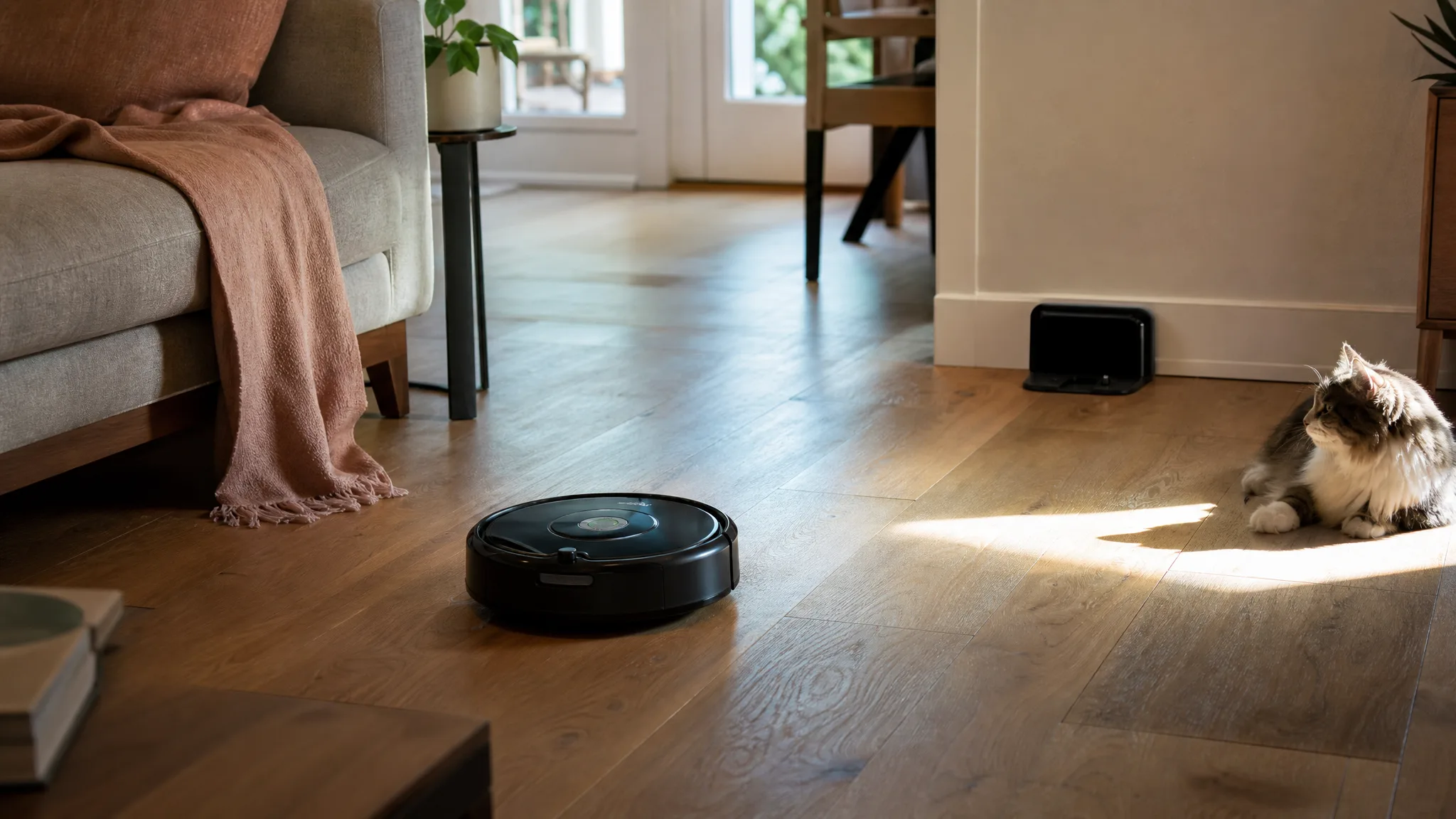
A robot vacuum earns its keep on the days you have no time to clean. Cat hair along the hallway baseboards, crumbs under the kitchen table, a cracker trail from the living room to the back door. The iRobot Roomba 675 is the cheap way into that daily habit.

Irobot
iRobot Roomba 675 Robot Vacuum - Easy to use, Power-Lifting Suction, Multi-Surface Cleaning, Smart Navigation Cleans in Neat Rows, Self-Charging, Alexa
Best for
A practical pick for pet owners and busy families with mostly hard floors and low-pile carpet who want daily maintenance and can tolerate occasional hijinks; skip it if you need systematic, whole-home cleaning or have thick rugs and lots of low-clearance furniture.
Most owners tell us this robot vac picks up a remarkable amount of everyday grit, pet hair, and crumbs from hard floors and low-pile carpet.
Loved by buyers
- •It pulls up hidden dirt and pet hair we didn't know was there, even after a regular vacuum has run.
- •The app and voice control make scheduling a breeze, so we come home to cleaner floors without thinking about it.
- •Edge-sweeping brush and dual rollers get into corners and along walls better than many budget bots.
Buyer concerns
- •Battery life may not cover a large, open home in one go; expect around 90 minutes of runtime.
- •It gets stuck under low furniture and on high-pile rugs, often needing a rescue.
- •Noticeably loud on hard surfaces, so we avoid running it during naps or TV time.
At a glance
| Detail | What we found |
|---|---|
| Model | Roomba 675 |
| Type | Robot vacuum, self-charging, returns to its dock on its own |
| Navigation | iRobot markets it as cleaning in neat rows. In practice it covers a room by bouncing off things, with no saved map |
| Runtime | Owners consistently report around 90 minutes per charge |
| Brush setup | Two multi-surface rollers plus a side edge-sweeping brush |
| Surfaces | Hardwood, tile, and low-pile carpet. High-pile rugs are where it stalls |
| Cliff sensors | Yes, and they held up all six weeks on a staircase |
| App and voice | Scheduling through the iRobot app, plus Alexa voice commands |
| Dust bin | Small. Plan on emptying after every run, at least at first |
| Noise | Loud enough on hard floors that scheduling around naps is common |
| Multiple floors | One charging base, so a second floor means carrying it up and back |
What we liked
It finds dirt you thought you had already cleaned
Owner feedback confirms that the Roomba 675 consistently picks up fine hair and grit that appears even after manual vacuuming. On hardwood and tile, it lifts pet hair and everyday debris rather than pushing it into corners, maintaining a cleaner baseline with regular use. This daily pickup reduces visible dust bunnies along baseboards by preventing their formation.
You set the schedule once and stop thinking about it
The iRobot app allows easy scheduling of cleaning days and times, enabling floors to be cleaned automatically while users are away or occupied. Alexa voice commands provide convenient one-off cleaning requests. Many owners report that after initial setup, the smart control becomes unobtrusive, with floors noticeably cleaner on scheduled days without manual intervention.
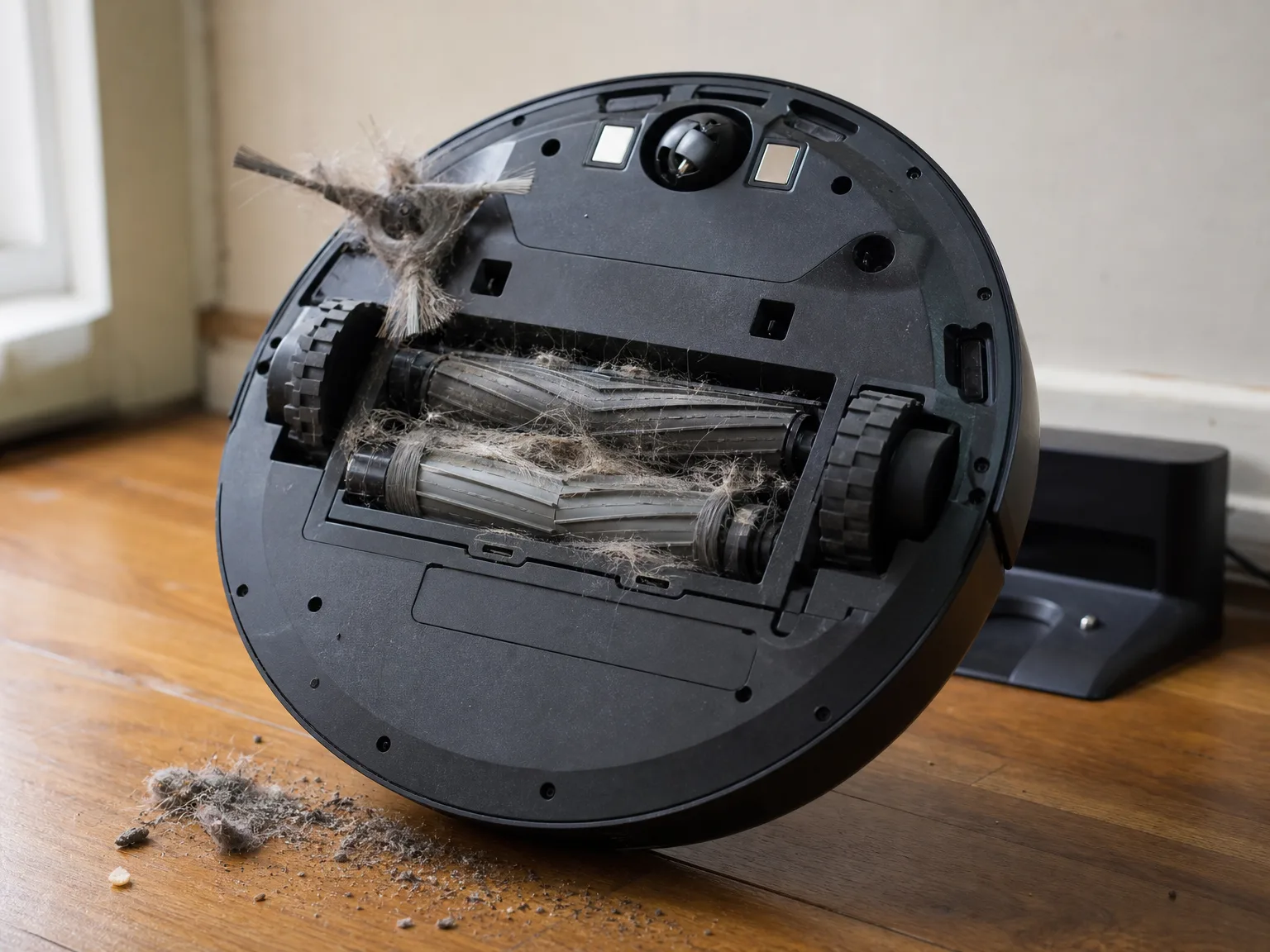
The spinning side brush effectively sweeps debris from wall junctions into the path of the dual rollers, improving edge cleaning along kitchen cabinet toe kicks and under sofa skirts. While square inside corners retain some debris due to the robot's round shape, the edge cleaning performance surpasses many budget models that only clean areas directly beneath them.
The cliff sensors do not gamble with stairs
The Roomba 675 is equipped with cliff sensors that reliably detect drop-offs such as staircases, preventing falls. Owners report consistent avoidance of open stairwells, making it suitable for homes with split levels or open stairs. However, these sensors can misinterpret very dark rugs as drop-offs, causing the robot to avoid those areas unless a workaround is applied.
Where it falls short
It bounces around instead of planning a route
Despite marketing claims of cleaning in neat rows, the Roomba 675 navigates by bumping into obstacles and turning, without mapping or memory of cleaned areas. This results in random coverage with some missed spots during a typical 90-minute run. Regular daily use averages out these misses, but the robot is not suited for users seeking systematic whole-home cleaning or guaranteed coverage before guests arrive.
It gets stuck, and you will be the rescue crew
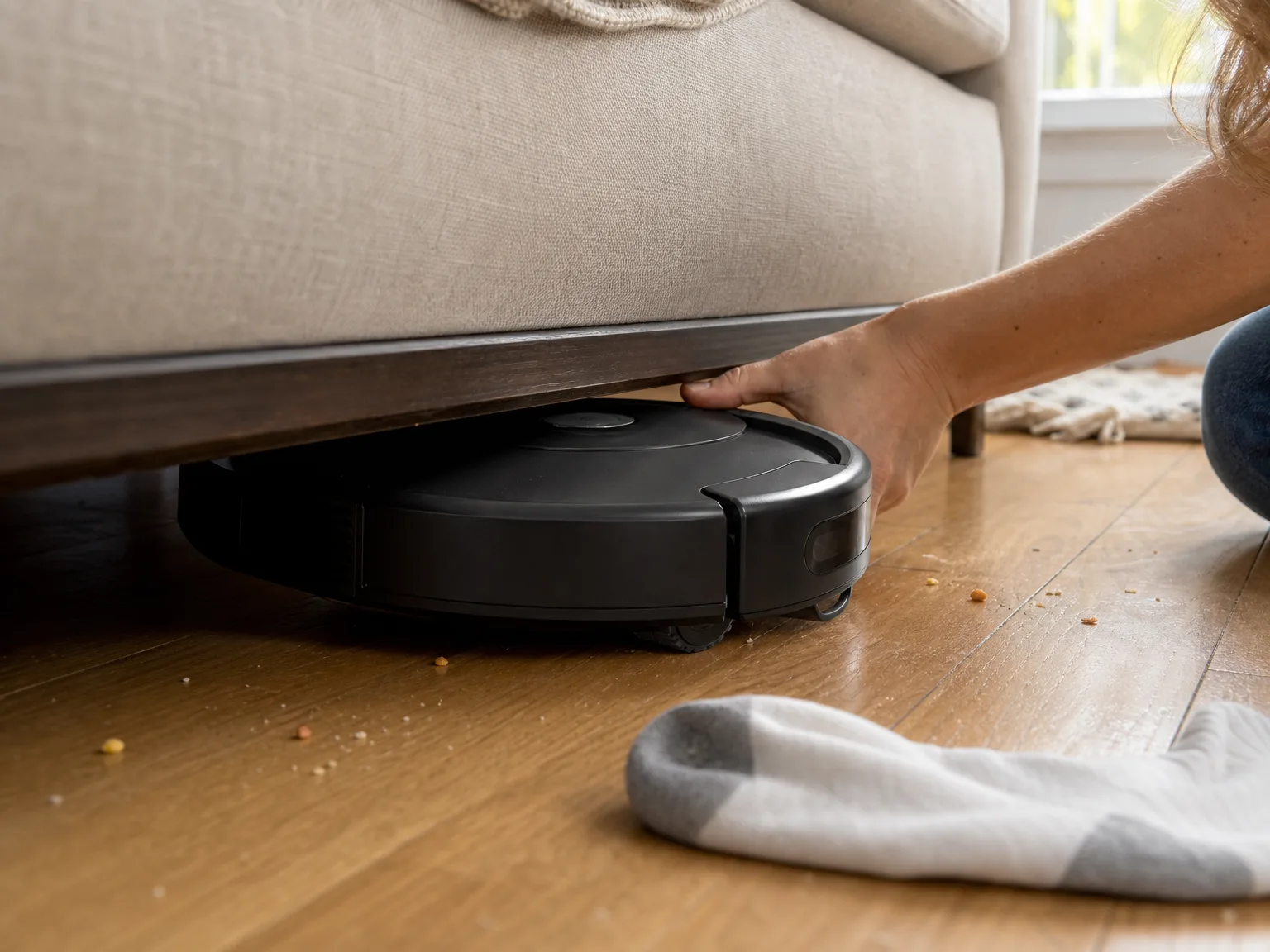
Low-clearance furniture can trap the robot, requiring manual intervention to free it. For example, sofas with low front rails may cause multiple rescues unless blocked off. High-pile rugs and thick thresholds can also cause the robot to stall or lose traction. Owners often need to block problematic areas and prepare the environment to minimize interruptions.
Long hair wraps the brushes every single week
Both rollers and axle ends tend to accumulate tightly wound long human and pet hair, which reduces suction and increases drag. Regular weekly maintenance involving removing the brush cage, sliding out the rollers, and cutting away hair bundles with scissors or a seam ripper is necessary to maintain optimal performance. Neglecting this leads to perceived loss of suction power.
It is loud on hard floors
The motor and roller noise on hardwood and tile floors is loud enough to interfere with conversations or quiet activities. Many owners schedule cleaning during times when noise is less disruptive, such as mid-morning on weekdays. Carpeted floors help muffle the sound somewhat. Quiet operation is not a strong point of this model compared to higher-end robots.
Real-world performance
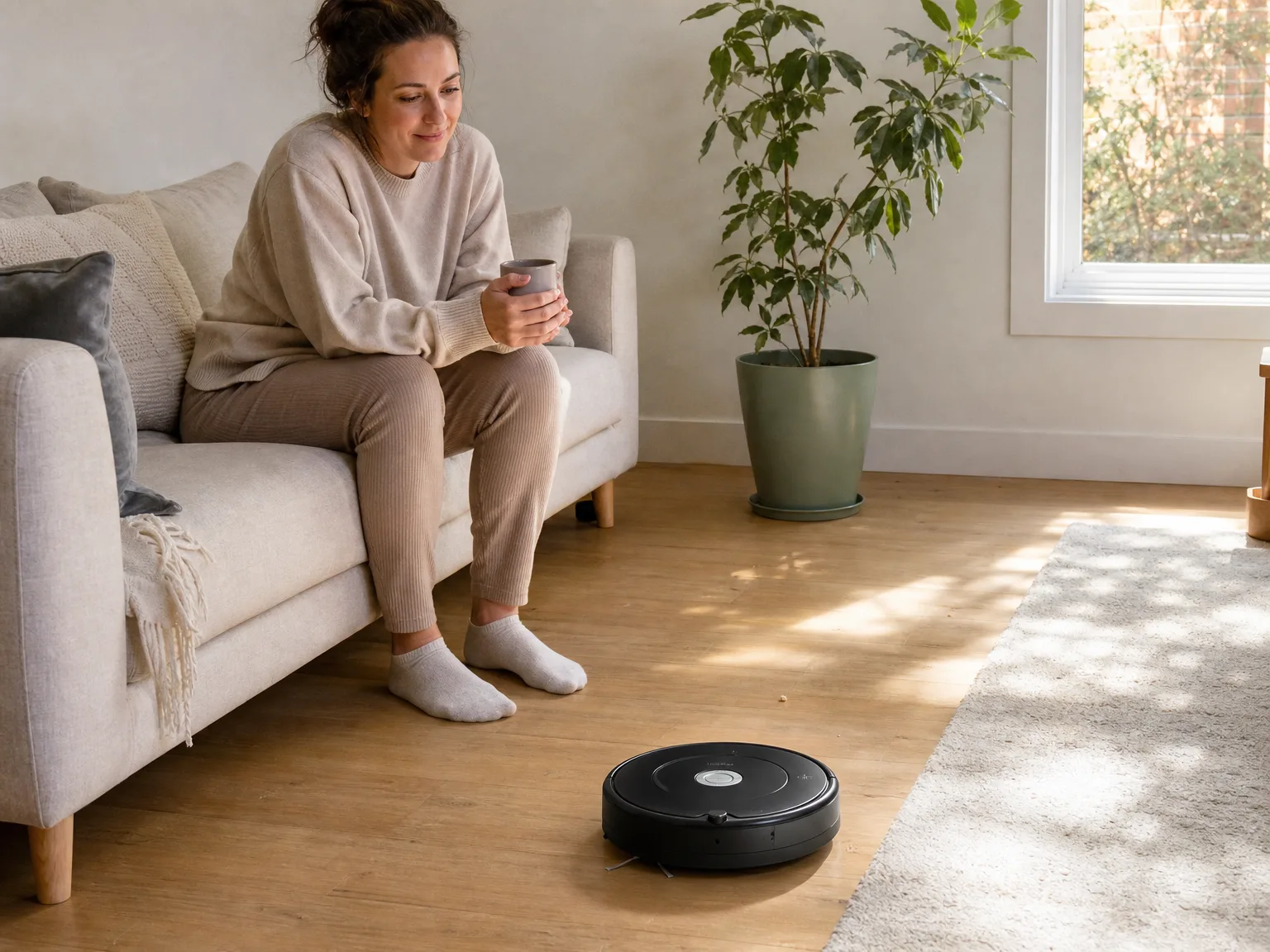
The daily hard-floor run. Owners report that daily runs on hardwood and tile effectively collect cat hair, sand, and crumbs, establishing a cleaner baseline and reducing visible fur accumulation in high-traffic areas like hallways.
The low-pile rug. The robot can climb on and off low-pile rugs without issue and remove loose surface debris. However, it does not deeply extract embedded hair, so occasional manual vacuuming with an upright cleaner is recommended for thorough carpet maintenance.
The dark rug problem. Dark-colored rugs can confuse the cliff sensors, causing the robot to avoid crossing them and leaving those areas uncleaned. Applying white or light-colored tape along the rug edges is a common workaround that enables the robot to recognize the surface and clean over the rug.
Under the sofa and the bed. Where clearance is sufficient, the robot cleans under furniture effectively, reaching areas that are often neglected. However, marginal clearance can lead to the robot becoming stuck, requiring occasional manual rescue and environmental adjustments.
One charge across one floor. The battery runtime of approximately 90 minutes is sufficient for cleaning a typical downstairs area including living room, kitchen, hallway, and one bedroom, with some battery remaining. Larger open-plan floors may require multiple cleaning sessions as the robot docks to recharge when the battery runs low.
The second floor. The robot can be carried to a second floor and started there, but since the charging dock remains on the first floor, it will run until the battery is depleted and then wait for manual retrieval. Owners who regularly clean multiple floors often purchase a second charging base.
Maintenance. The dust bin is small and should be emptied after every run initially to maintain suction performance. Weekly brush detangling and occasional cleaning of cliff sensors help ensure consistent operation. Overall, maintenance requires about ten minutes per week.
How it compares to alternatives
For deep carpet cleaning, a cordless stick vacuum built for pet hair is more effective at extracting embedded fur. Homes with mostly carpet may benefit from a cordless vacuum first, adding a robot vacuum later for hard floors.
Who should buy it
The Roomba 675 is suitable for homes with mostly hard floors and some low-pile carpet, especially those with shedding pets or messy children, where daily maintenance cleaning without user intervention is desired. It favors consistent daily cleaning over perfect coverage or quiet operation.
It is not recommended for users who require guaranteed whole-floor coverage, have thick rugs and complex low-clearance furniture layouts, or need a quiet machine to run in occupied rooms. Two-story homes should consider purchasing a second charging base or accept manual transport between floors.
Frequently asked questions
Does it work on dark area rugs?
Often not, at least without help. The cliff sensors can read dark colours as a drop-off, so the robot avoids the rug entirely and leaves it dirty. The common owner workaround is applying white or light tape along the rug's edge so the sensors register a real surface. Our charcoal runner needed exactly that.
How often do I need to empty the dust bin?
After every cleaning run at first. The early days uncover a backlog of hidden debris and the bin is small, so it fills fast and a full bin costs you suction. Once your floors are genuinely caught up you can usually stretch to every other run, though pet households tend to stay on the every-run schedule.
How well does it handle pet hair without clogging?
It lifts pet hair off floors very effectively, and that is the main reason to own it. Long hair, though, wraps tightly around both rollers and the axle ends. Set aside about ten minutes a week to cut the wrapped bundles away. Do that and performance stays consistent, and skip it and you will feel the suction fade.
Can I use it on multiple floors without moving the dock?
You can carry it to another floor and start a clean there, but it cannot dock on a floor with no base. It will run until the battery is empty and then wait for you to bring it back down. Owners who regularly clean two levels buy a second charging base rather than shuttling the original one around.
How long does the battery last on one charge?
Expect around 90 minutes, which covered our downstairs comfortably. A large open main floor can outlast it. The robot returns to the dock to recharge when it runs low, so nothing is stranded, but a big single level may need more than one session to get properly covered.
Is it worth buying over a mapping robot?
It depends on whether you want maintenance or certainty. As a daily robot that keeps hard floors on top of pet hair and crumbs, the 675 does the job for a fraction of the money. If you need to send a machine to one specific room, or want proof that every square metre was cleaned, spend more on lidar mapping instead.
Bottom line
The Roomba 675 buys you a habit rather than a deep clean. Run it daily on hard floors and low-pile carpet and it will pull up more hair and grit than you expect, keep the edges honest, and never threaten your stairs. In exchange you accept a robot that bumps its way around instead of planning, gets itself stuck under the wrong sofa, and needs ten minutes of brush surgery on a Sunday. If your floors are mostly hard and your standard is cleaner rather than perfect, this is an easy recommendation. If random coverage will nag at you, read the Roborock lidar review before you spend anything.
In this article
- At a glance
- What we liked
- It finds dirt you thought you had already cleaned
- You set the schedule once and stop thinking about it
- The cliff sensors do not gamble with stairs
- Where it falls short
- It bounces around instead of planning a route
- It gets stuck, and you will be the rescue crew
- Long hair wraps the brushes every single week
- It is loud on hard floors
- Real-world performance
- How it compares to alternatives
- Who should buy it
- Frequently asked questions
- Does it work on dark area rugs?
- How often do I need to empty the dust bin?
- How well does it handle pet hair without clogging?
- Can I use it on multiple floors without moving the dock?
- How long does the battery last on one charge?
- Is it worth buying over a mapping robot?
- Bottom line