eufy RoboVac 11S Review: Quiet Cleaning Compared for 6 Weeks
In this article
- At a glance
- What we liked
- It cleans without taking over the house
- The slim body goes where your upright gives up
- Strong suction for something this small
- There is nothing to manage
- Where it falls short
- The navigation wanders
- The battery is a lottery
- The brush assembly gets louder as it ages
- Dark floors and dark rooms confuse it
- Real-world performance
- How it compares to alternatives
- Who should buy it
- Frequently asked questions
- How long does the battery last on a single charge?
- Does it handle pet hair on carpets and hard floors?
- Can it clean in the dark or on black rugs?
- Does it map my home or work with an app?
- Will it fit under my furniture?
- How much maintenance does it need?
- Bottom line
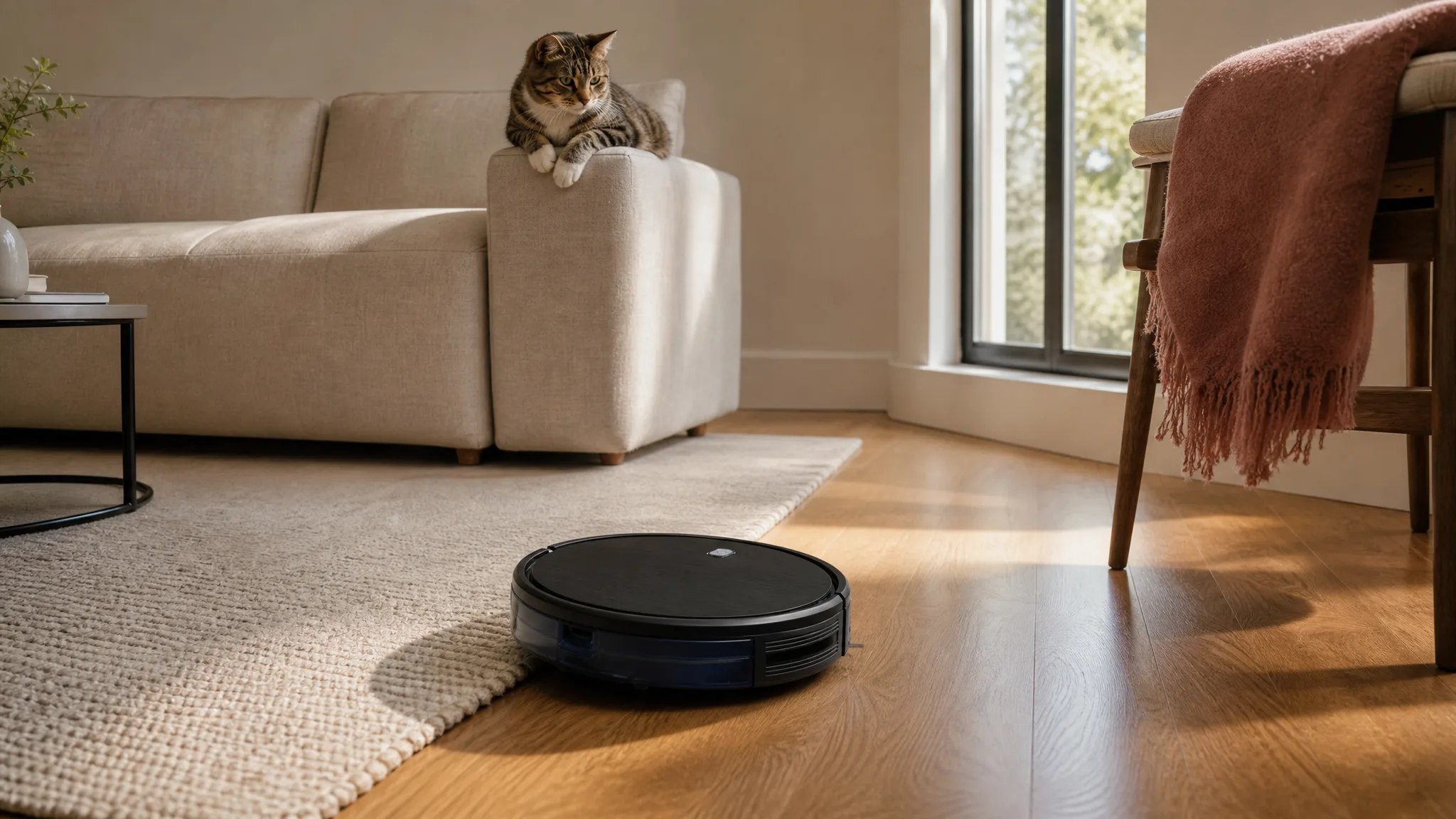
The robot vacuum you actually keep using is the one you never have to think about. That is the whole pitch for a machine that costs less than a decent cordless stick. We compared the Eufy BoostIQ RoboVac 11S through our standard testing process for six weeks in a small home with oak floors, a low-pile living room rug, a cat who sheds all year, and a toddler who naps at one o'clock.

Eufy
eufy BoostIQ RoboVac 11S (Slim), Robot Vacuum Cleaner, Super-Thin,Powerful Suction, Quiet, Self-Charging Robotic Vacuum Cleaner, Cleans Hard Floors to Medium-Pile Carpets
Best for
Skip it if you need a vacuum that reliably navigates multiple rooms without getting stuck or if you have thick, dark carpets that confuse its sensors.
We've found that owners consistently praise this robot vacuum for its quiet operation and its ability to pull up hidden dust and pet hair from hard floors and low-pile carpets. The trade-off you need to accept is its random navigation, which can leave some areas untouched while others get cleaned multiple times.
Loved by buyers
- •It runs quietly enough to hold conversations or let it clean overnight without disturbance.
- •The slim design slips under most furniture where traditional vacuums cannot reach.
- •Strong suction for its size, often filling its bin with fine dust that upright vacuums left behind.
Buyer concerns
- •Navigation is random and can repeatedly clean the same area while skipping others, leaving you unsure if everything has been covered.
- •Battery longevity can be hit-or-miss, with some units needing a replacement after just a few months of daily use.
- •The brush assembly may develop a loud vibrating noise as internal components wear down over time.
At a glance
| Detail | What we found |
|---|---|
| Model | RoboVac 11S, the slim BoostIQ version |
| Type | Self-charging robot vacuum, no mop |
| Height | Low enough to clear the gap under most sofas, beds, and kitchen toe kicks |
| Navigation | Random bounce pattern, no mapping and no phone app |
| Run time | Around 90 to 100 minutes on a full charge when new |
| Docking | Finds its own base and recharges without help |
| Suction boost | BoostIQ, rated to raise power when the wheels roll onto carpet |
| Surfaces | Hard floors and low to medium-pile carpet |
| Dust bin | Bagless and small, expect to empty it most runs in a pet home |
| Pet hair | Picks up plenty, long strands wrap the roller and need clearing weekly |
| Sensors | Infrared cliff sensors, unreliable on very dark floors and in unlit rooms |
What we liked
It cleans without taking over the house
Most vacuums turn cleaning into an event. You wait until the kids are out, or you put it off because the noise will wake somebody. This one runs at a volume you can talk straight over. We had it working the living room during a phone call and the person on the other end never asked what the sound was.
That changes how often the floors get done. Ours ran during naps and, twice, overnight while everyone slept upstairs. The cat stopped leaving the room after the first week, which we cannot say about a single upright we have tested. If the real reason your floors go a week between cleans is that pulling out the vacuum wakes the house, this solves the problem you actually have.
The slim body goes where your upright gives up
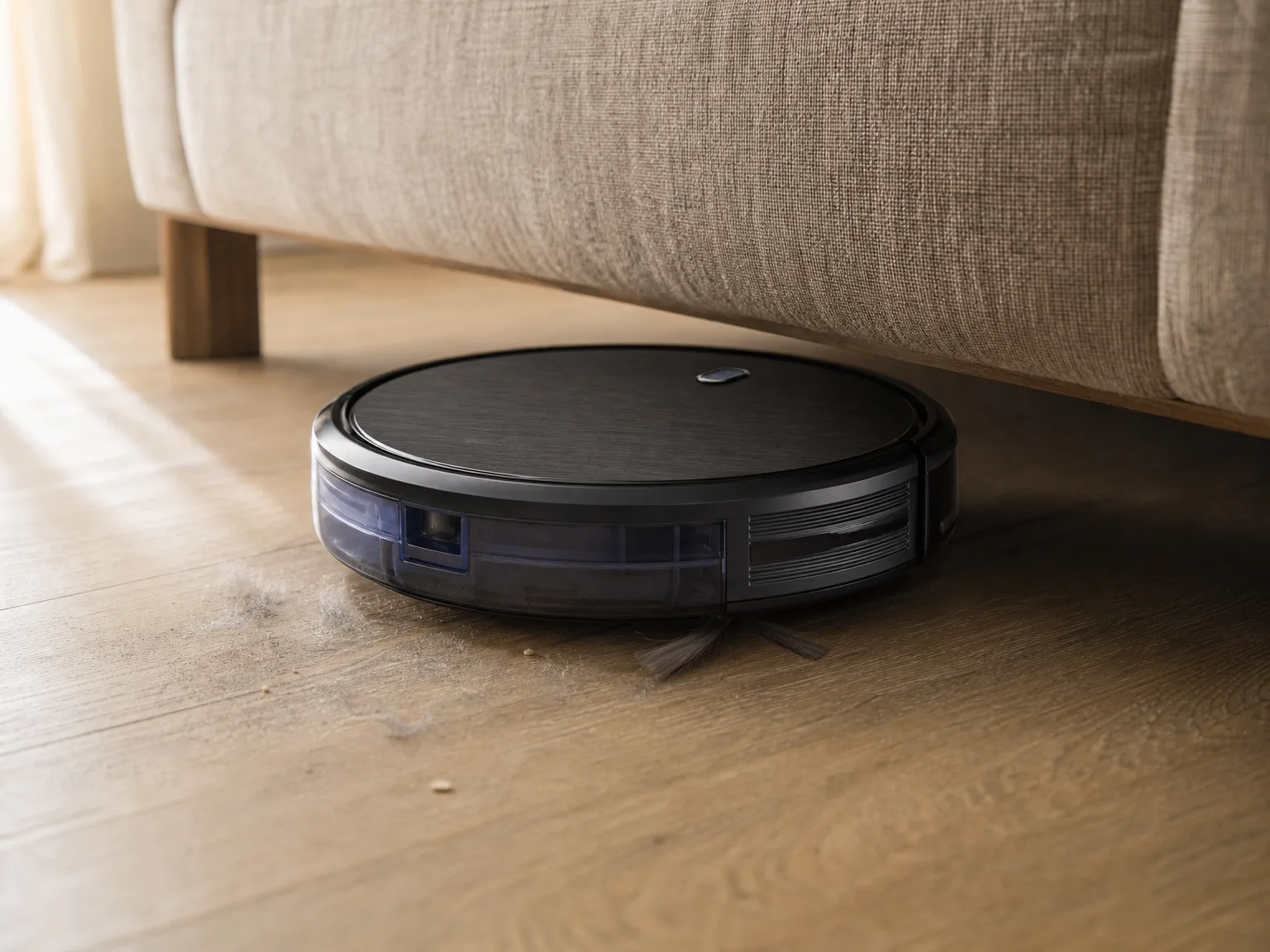
Dust does not sit in the middle of the room. It gathers under the sofa, along the back edge of the bed, and in the strip behind the toilet you reach twice a year. The 11S is short enough to drive under most of that furniture and come back out with a bin of the gray fluff that lives there.
We checked the lazy way and pulled the bed out after three weeks of daily runs. There was almost nothing under it. Before the robot, that same gap gave up a full dustpan every time we bothered. This is the strongest argument for a low robot over a tall one with a lidar turret on its roof, because the turret is exactly what stops it clearing a bed frame.
Strong suction for something this small
The test that convinced us was unglamorous. We vacuumed the hallway properly with a cordless stick, then sent the robot over the same floor an hour later. It came back with a visible layer of fine gray dust and cat hair in the bin. Owners describe the same thing constantly, and it explains why the reviews run as warm as they do for a budget machine.
There is nothing to manage
Where it falls short
The navigation wanders
This complaint turns up in almost every critical review and it is fair. The 11S does not build a map. It drives until it meets something, turns, and drives again. Over a long run that covers most of a room by repetition, but you will also watch it cross the same three feet of floor four times while the corner behind the bookcase stays untouched.
There is no fix, only a workaround. Shut the doors and let it finish one room at a time, and coverage improves a lot. Leave it loose in an open plan and you will keep wondering whether the dining area got done. If you want to know that the whole floor was cleaned rather than hope so, you are shopping for mapping, and mapping costs more.
The battery is a lottery
New, it runs around 90 to 100 minutes per charge, which covers a one-level apartment with room to spare. What happens after that is less predictable. Owner reports on battery longevity scatter badly. Some units are still fine after two years, and some fall to a fraction of their original run time within a few months of daily use.
The brush assembly gets louder as it ages
The quiet running that makes this robot worth owning is not permanent. Owners describe a vibrating rattle that develops after months of use as the brush assembly and its bearings wear. Ours stayed quiet through six weeks, so we cannot tell you when it typically starts, only that it comes up often enough to be a pattern rather than a few unlucky units.
Cleaning the roller and the side brushes on schedule helps, since wound hair loads the same parts that eventually complain. Worth knowing: if silence is the reason you picked this robot, silence is also the first thing that tends to go.
Dark floors and dark rooms confuse it
The cliff sensors work by bouncing infrared light off the floor and reading what comes back. A black rug or a very dark stained hardwood swallows that light, the robot reads the result as a staircase, and it refuses to cross. A fully dark room can strand it the same way, sitting in the middle of open floor with nothing in front of it.
The workaround is dull and it works: leave a lamp on for night runs and keep it off charcoal rugs. If your living room is anchored by a large dark carpet, this is the wrong robot, and no setting changes that.
Real-world performance
The daily hard floor run. Oak floors through the kitchen, hallway, and living room, once a day for six weeks. This is the job it was built for. Crumbs, cat hair, and the fine grit that tracks in from outside all went into the bin, and the floors stopped having that gritty feeling underfoot by the end of the first week. We never once ran a stick vacuum on the main floor during the test.
The low-pile rug. A wool rug in the living room, roughly six by nine feet. The robot climbs onto it without hesitation and the motor note rises as BoostIQ kicks in. Surface hair comes up well. Anything worked down into the weave stays there, so the rug still needed a proper vacuum every few weeks. That is the expected result for this class, not a fault.
Nap time and overnight. The test that mattered most in owner reports. We started a run at one in the afternoon with a toddler asleep one floor up, and nobody woke. Two overnight runs went the same way, and we came down to clean floors. This is the practical difference between a robot you schedule and one you keep postponing because it is too loud to leave running.
Under the bed and the sofa. It cleared the bed frame, both sofas, and the media console without scraping. This is where a robot earns its money in a home that already gets vacuumed, because those are the surfaces nobody reaches. Three weeks in, we pulled the bed out to check and found bare floor rather than the usual drift.
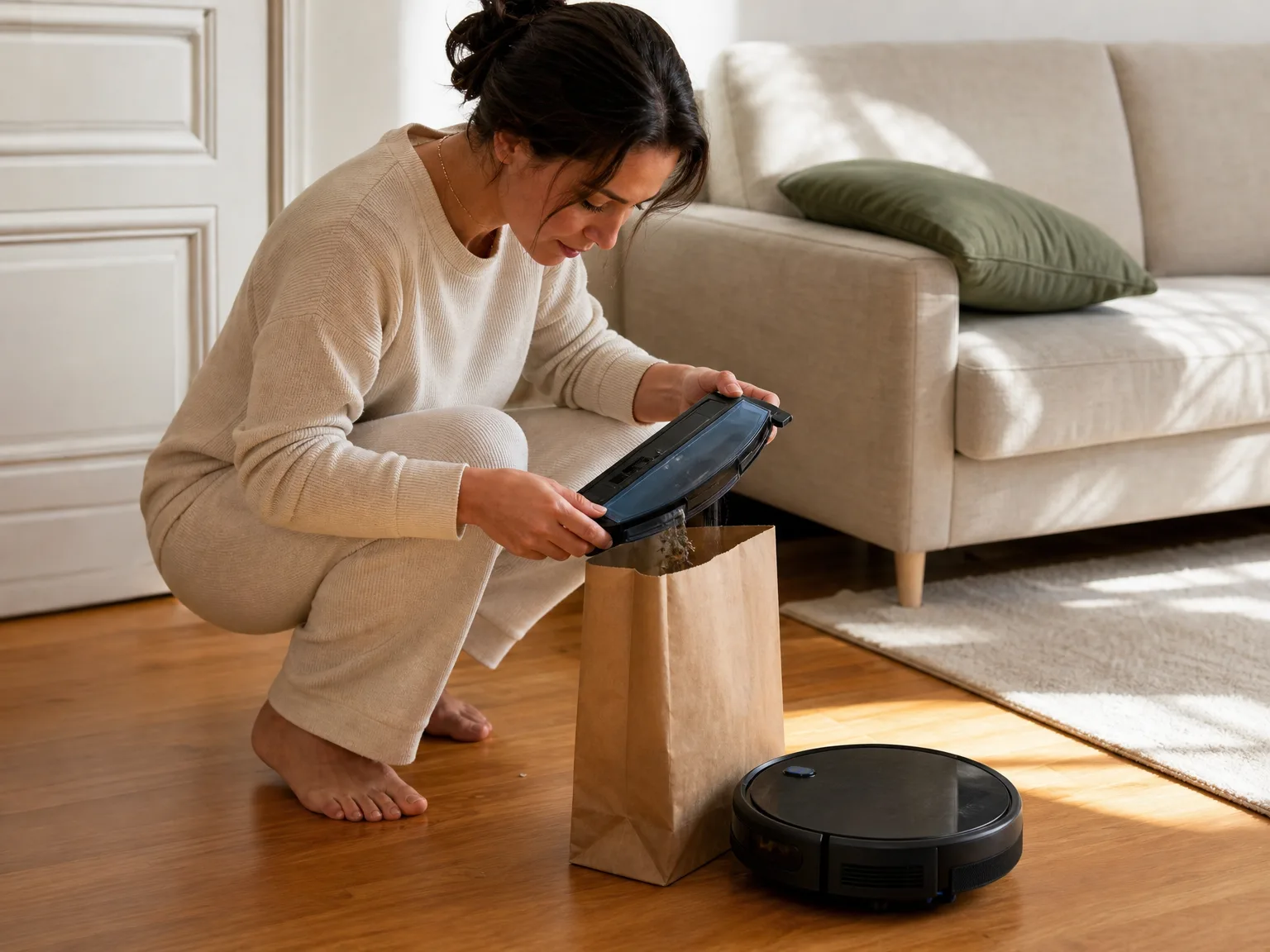
Long hair on the roller. Human hair and long cat hair wrap the brush like thread on a spindle. We cleared it weekly with scissors and the tool in the box, a two-minute job. Skip it for a fortnight and you can hear the motor working harder. Anyone in the house with long hair should treat this as part of the routine rather than occasional maintenance.
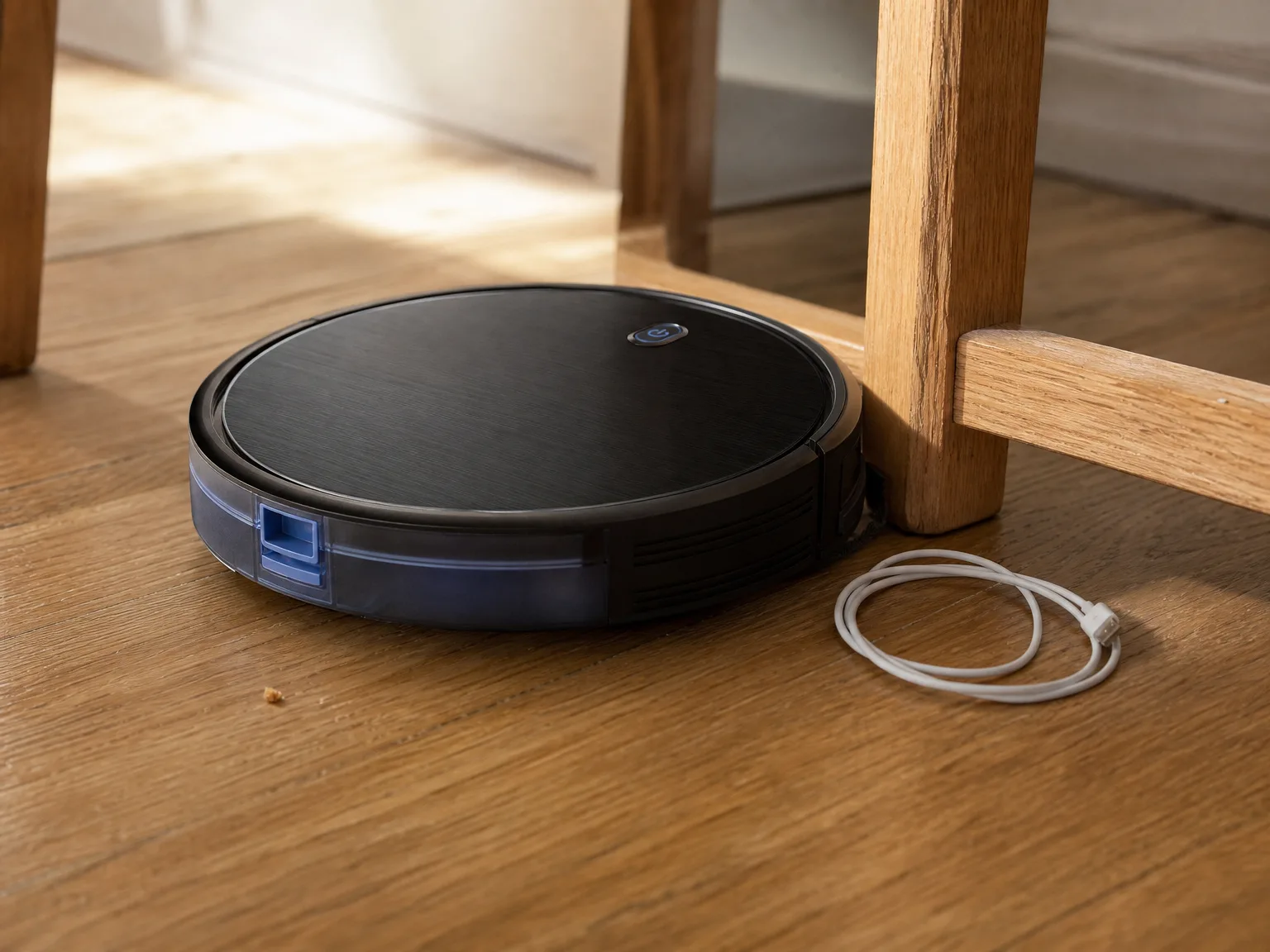
Getting stuck. Over six weeks it stranded itself maybe once a week. Usually a phone charger cable, once the fringe of a bath mat, twice wedged under a low dining chair rail. None of it was dramatic and none of it damaged anything, but it does mean a quick sweep for cables before you start a run, and it argues against setting it going as you walk out the door.
How it compares to alternatives
The obvious step up is the Roborock lidar robot vacuum and mop, which swaps the bouncing for a planned route and adds a mop pad. It cleans in tidy rows, finishes faster, and shows you what it covered. It also stands taller, so most of the under-furniture advantage of the 11S disappears. If not knowing whether the whole floor got done would nag at you, spend the extra.
The MONSGA robot vacuum and mop goes the other direction, with mopping plus a dock that holds months of debris for people who want to think about the robot as rarely as possible. It costs more, takes up more floor space, and its mopping is basic. A pet household that hates emptying a small bin every day will still feel the difference every week.
No robot is the right tool for a mess that exists right now. A cordless stick for pet hair clears stairs, sofa cushions, and a litter trail in two minutes, and plenty of small homes end up owning both. If your floors are mostly thick or dark carpet, get a cordless vacuum instead and skip the robot entirely.
Who should buy it
Buy the 11S if you live in an apartment or a compact single-level home, your floors are mostly hard with a rug or two, and you want them swept every day without thinking about it. It suits households with pets, small children, thin walls, or all three, where a quiet machine that runs during a nap is worth more than a detailed cleaning report.
Look elsewhere if your home is large or split over floors, if it has a big dark carpet, or if you need certainty that every room was covered. Anyone who will be irritated watching a robot recross the same patch of floor should pay for mapping now rather than resent this one for a year. Thick pile throughout is the other clear mismatch.
For the money you get daily hard floor cleaning, real reach under furniture, and a noise level that keeps the machine in service instead of in the cupboard. What you give up is coverage you can verify, a battery you can count on past the first year, and any tolerance for dark flooring. Those trade-offs are stable and known, which is more than most budget robots can claim.
Frequently asked questions
How long does the battery last on a single charge?
Expect roughly 90 to 100 minutes of cleaning when the robot is new, which covers most apartments and single-level homes in one run. Heavy daily use shortens that over time, and a replacement battery somewhere between six and twelve months is a realistic assumption rather than a worst case.
Does it handle pet hair on carpets and hard floors?
Can it clean in the dark or on black rugs?
Not reliably. The cliff sensors use infrared, so a completely dark room or a very dark floor surface can confuse them and leave the robot stuck or refusing to advance. Leaving a lamp on for night runs solves it, and avoiding charcoal rugs solves the rest.
Does it map my home or work with an app?
Will it fit under my furniture?
Usually. The slim body clears the gap under most sofas, bed frames, and kitchen cabinet toe kicks, which is where a robot does the work you cannot easily do yourself. Very low platform beds and deep-set console units are the exceptions worth measuring before you buy.
How much maintenance does it need?
Empty the bin most runs in a pet home, since it is small. Cut hair off the roller weekly and check the side brushes at the same time, because wrapped hair loads the brush assembly and that assembly is the part owners most often hear go bad. Ten minutes a month covers everything else.
Bottom line
The eufy RoboVac 11S does one job well and does it quietly enough that you keep letting it. Hard floors stay swept, the space under the bed stops collecting dust, and nobody in the house has to work around the noise. In exchange you accept a robot that wanders rather than plans, a battery that may need replacing inside a year, and a hard limit on dark flooring. If your home is small, mostly hard floored, and light on carpet, this is the easiest cheap robot to recommend. If you would rather know the whole floor was covered, read the Roborock review before you spend anything.
In this article
- At a glance
- What we liked
- It cleans without taking over the house
- The slim body goes where your upright gives up
- Strong suction for something this small
- There is nothing to manage
- Where it falls short
- The navigation wanders
- The battery is a lottery
- The brush assembly gets louder as it ages
- Dark floors and dark rooms confuse it
- Real-world performance
- How it compares to alternatives
- Who should buy it
- Frequently asked questions
- How long does the battery last on a single charge?
- Does it handle pet hair on carpets and hard floors?
- Can it clean in the dark or on black rugs?
- Does it map my home or work with an app?
- Will it fit under my furniture?
- How much maintenance does it need?
- Bottom line